Each product available on the platform is listed and sold by a partner seller identified on the product page. The platform acts as a metasearch/marketplace: it facilitates discovery and checkout, but the sale is made by the seller, who becomes responsible for the transaction.
Shipping is managed directly by the partner seller. The package is sent from the seller's warehouse or logistics network and handed over to the courier. This model enables more efficient deliveries and ensures that order management is handled by the party with actual availability of the product.
On the product page, you will find ingredients, allergens and nutritional information based on the data provided by the seller or producer, namely the official label. If you have allergies or intolerances, we recommend carefully checking the product page before purchasing and contacting the seller with any specific questions.
The platform was created to promote Italian food and make it more accessible. We select sellers in the food e-commerce sector with consistent catalogs and transparent information. Each product is associated with an identifiable seller and a complete information page: we want shopping here to mean buying with confidence.
Delivery times and costs depend on the seller and destination. At checkout, you will always find an updated delivery estimate before confirming payment. For international shipments, times may vary depending on the country and courier.
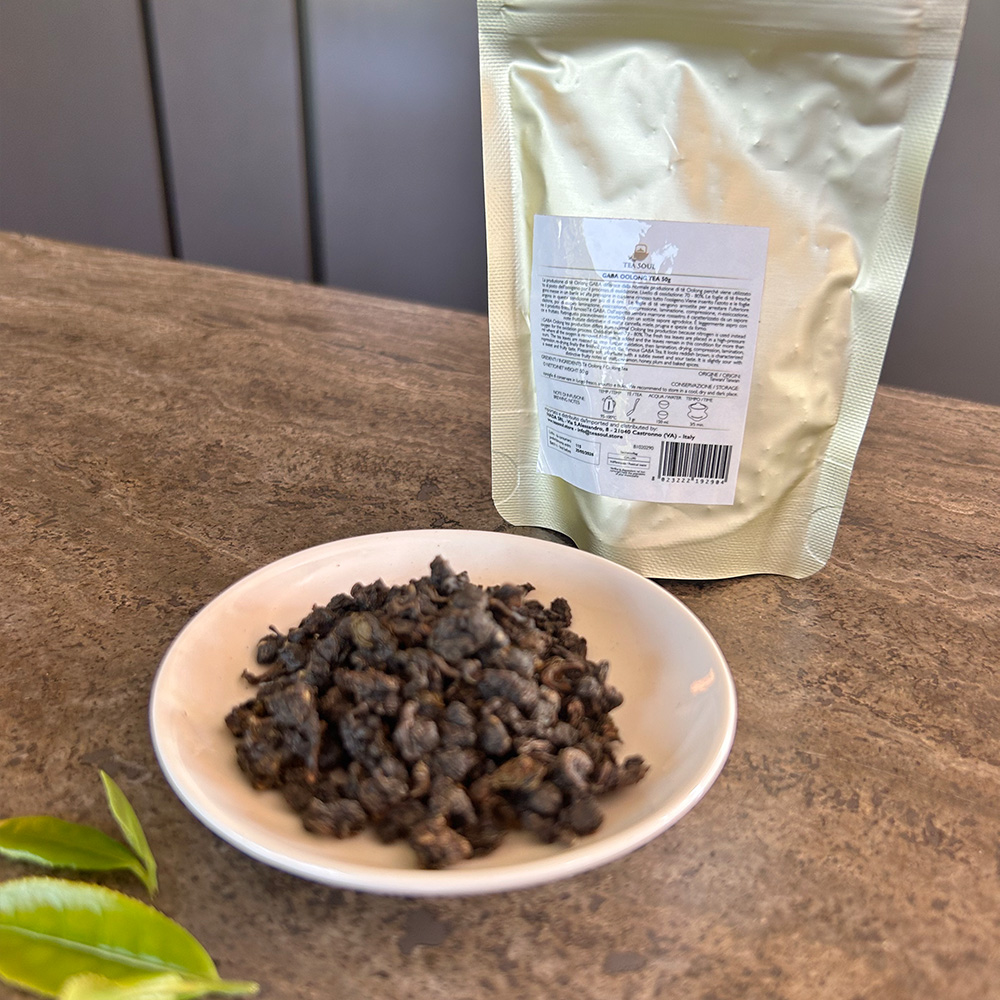
GABA oolong tea is a type of tea typical of Taiwan, obtained through a particular processing of the leaves in an oxygen-free environment. The leaves of this tea were produced from this spring’s harvest and therefore have an aromatic profile characterized by greater freshness and fragrance. The roasting is slightly less intense than that of the other two GABA Oolongs, a characteristic that is clearly reflected in the taste of the beverage. From the very first sip, a delicate and fragrant sweetness emerges, accompanied by a note reminiscent of ripe mango and a light fresh vegetal nuance. The roasting remains more discreet than in other GABA Oolongs, leaving room for sweeter and fruitier aromatic notes. As the tasting continues, the beverage develops a pleasant warm sensation in the mouth, followed by notes reminiscent of unprocessed cocoa and, subsequently, delicate woody aromas. Compared with other Oolongs of the same type, this tea also has less intense spicy notes, making it particularly interesting for those wishing to explore the fresher and more fragrant side of GABA Oolongs. To fully appreciate the differences, we invite you to compare it with the other two GABA Oolongs in our selection: a direct comparison makes it possible to perceive the different nuances determined by the processing and roasting. Place of origin: Taiwan Production: After harvesting, the leaves are left to wither in the sun for a short period, followed by a resting phase on covered bamboo trays. The leaves are then processed and oxidized through a delicate hand massage performed by the master producer. The leaves are subsequently left to oxidize under conditions of reduced exposure to air, according to the particular method used for this type of Oolong. When the tea reaches the desired level of oxidation, around 40%, the leaves undergo a roasting phase in a charcoal-fired oven, which makes it possible to halt enzymatic activity. The leaves are then shaped into their characteristic rolled form, either using a special machine or by hand. After drying, the tea is ready to be packaged and enjoyed. Preparation: We strongly recommend infusing this tea using the traditional Chinese method (gong fu cha) to best enjoy these leaves. With this preparation, use 5 grams of leaves (about 3 teaspoons) in a gaiwan of approximately 150 ml to obtain multiple infusions with different flavors. After quickly rinsing the leaves in water at 90 °C, proceed with a first infusion of 40 seconds and then, keeping the water at the same temperature, increase the time by 10 seconds each time compared with the previous infusion (40 – 50 – 60…). This tea can withstand approximately 7 infusions. For a classic preparation in the Western style, we recommend 3 grams of leaves (about 2 teaspoons) in a 200 ml cup, with water at 90 °C, for an infusion time of 3 minutes. If you wish to experiment with infusing this tea using different quantities of leaves, try to choose a suitable amount that allows the leaves to expand freely in the water, without being compressed or obstructed. In this way, you will make the most of this product, encouraging the extraction of the aromatic substances and obtaining the fullest flavor. The tea can be filtered for greater ease while tasting, and the infusion times indicated above are purely approximate, so they can also be adjusted according to personal taste. Store in a cool, dry place away from direct sunlight.
Price including VAT
GABA oolong tea is a type of tea typical of Taiwan, obtained through a particular processing of the leaves in an oxygen-free environment. The leaves of this tea were produced from this spring’s harvest and therefore have an aromatic profile characterized by greater freshness and fragrance. The roasting is slightly less intense than that of the other two GABA Oolongs, a characteristic that is clearly reflected in the taste of the beverage. From the very first sip, a delicate and fragrant sweetness emerges, accompanied by a note reminiscent of ripe mango and a light fresh vegetal nuance. The roasting remains more discreet than in other GABA Oolongs, leaving room for sweeter and fruitier aromatic notes. As the tasting continues, the beverage develops a pleasant warm sensation in the mouth, followed by notes reminiscent of unprocessed cocoa and, subsequently, delicate woody aromas. Compared with other Oolongs of the same type, this tea also has less intense spicy notes, making it particularly interesting for those wishing to explore the fresher and more fragrant side of GABA Oolongs. To fully appreciate the differences, we invite you to compare it with the other two GABA Oolongs in our selection: a direct comparison makes it possible to perceive the different nuances determined by the processing and roasting. Place of origin: Taiwan Production: After harvesting, the leaves are left to wither in the sun for a short period, followed by a resting phase on covered bamboo trays. The leaves are then processed and oxidized through a delicate hand massage performed by the master producer. The leaves are subsequently left to oxidize under conditions of reduced exposure to air, according to the particular method used for this type of Oolong. When the tea reaches the desired level of oxidation, around 40%, the leaves undergo a roasting phase in a charcoal-fired oven, which makes it possible to halt enzymatic activity. The leaves are then shaped into their characteristic rolled form, either using a special machine or by hand. After drying, the tea is ready to be packaged and enjoyed. Preparation: We strongly recommend infusing this tea using the traditional Chinese method (gong fu cha) to best enjoy these leaves. With this preparation, use 5 grams of leaves (about 3 teaspoons) in a gaiwan of approximately 150 ml to obtain multiple infusions with different flavors. After quickly rinsing the leaves in water at 90 °C, proceed with a first infusion of 40 seconds and then, keeping the water at the same temperature, increase the time by 10 seconds each time compared with the previous infusion (40 – 50 – 60…). This tea can withstand approximately 7 infusions. For a classic preparation in the Western style, we recommend 3 grams of leaves (about 2 teaspoons) in a 200 ml cup, with water at 90 °C, for an infusion time of 3 minutes. If you wish to experiment with infusing this tea using different quantities of leaves, try to choose a suitable amount that allows the leaves to expand freely in the water, without being compressed or obstructed. In this way, you will make the most of this product, encouraging the extraction of the aromatic substances and obtaining the fullest flavor. The tea can be filtered for greater ease while tasting, and the infusion times indicated above are purely approximate, so they can also be adjusted according to personal taste. Store in a cool, dry place away from direct sunlight.