Each product available on the platform is listed and sold by a partner seller identified on the product page. The platform acts as a metasearch/marketplace: it facilitates discovery and checkout, but the sale is made by the seller, who becomes responsible for the transaction.
Shipping is managed directly by the partner seller. The package is sent from the seller's warehouse or logistics network and handed over to the courier. This model enables more efficient deliveries and ensures that order management is handled by the party with actual availability of the product.
On the product page, you will find ingredients, allergens and nutritional information based on the data provided by the seller or producer, namely the official label. If you have allergies or intolerances, we recommend carefully checking the product page before purchasing and contacting the seller with any specific questions.
The platform was created to promote Italian food and make it more accessible. We select sellers in the food e-commerce sector with consistent catalogs and transparent information. Each product is associated with an identifiable seller and a complete information page: we want shopping here to mean buying with confidence.
Delivery times and costs depend on the seller and destination. At checkout, you will always find an updated delivery estimate before confirming payment. For international shipments, times may vary depending on the country and courier.
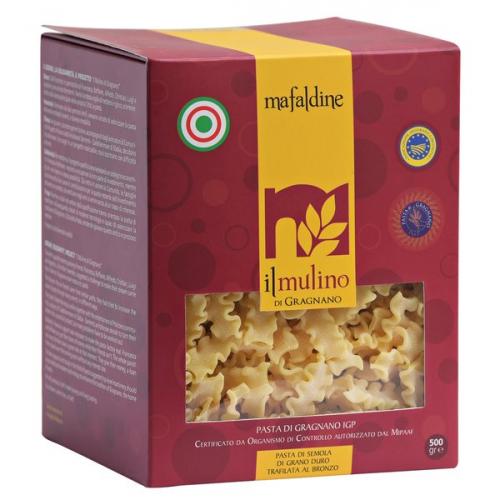
Il Mulino di Gragnano's Short Mafaldine are a typical pasta shape from Campania, presented by Il Mulino di Gragnano in its classic durum wheat semolina version. They were dedicated to Mafalda of Savoy when she was born in 1902, which is why they were named mafaldine or reginette, although this shape had existed for much longer. They are a short, ruffled pasta shape. They are simply the already-broken version of long mafaldine, making them excellent for “mixed pasta”. Short Mafaldine from Gragnano: the history According to an ancient legend, this dish was invented in 1250 for the King of Sicily, Manfred of Swabia. The king, at war with the Papacy to gain possession of Southern Italy, was welcomed by the population when he arrived with his troops in Sannio with a delicious dish of Mafalde seasoned with his favourite cheese, ricotta. As we have seen, however, this shape was named Mafaldina in honour of the birth of Queen Mafalda in 1902. This pasta from Naples was later spread throughout Italy. A symbol of Neapolitan cuisine, it was considered “‘o piatto d’e feste” and is still prepared mainly for Sunday lunches or holidays, with rich, elaborate sauces typical of the Campania tradition. How Short Mafaldine are made The production of Short Mafaldine from Gragnano is very simple. The Il Mulino di Gragnano pasta factory selects the finest Apulian wheat and uses only pure water from Mount Faito. An essential tool is the bronze die, which ensures the porosity of the mafaldine, an indispensable feature for enhancing the flavours of the dish. Slow drying at low temperatures preserves the characteristics of the wheat, giving the mafaldine aroma, flavour and excellent cooking firmness.
Price including VAT
Il Mulino di Gragnano's Short Mafaldine are a typical pasta shape from Campania, presented by Il Mulino di Gragnano in its classic durum wheat semolina version. They were dedicated to Mafalda of Savoy when she was born in 1902, which is why they were named mafaldine or reginette, although this shape had existed for much longer. They are a short, ruffled pasta shape. They are simply the already-broken version of long mafaldine, making them excellent for “mixed pasta”. Short Mafaldine from Gragnano: the history According to an ancient legend, this dish was invented in 1250 for the King of Sicily, Manfred of Swabia. The king, at war with the Papacy to gain possession of Southern Italy, was welcomed by the population when he arrived with his troops in Sannio with a delicious dish of Mafalde seasoned with his favourite cheese, ricotta. As we have seen, however, this shape was named Mafaldina in honour of the birth of Queen Mafalda in 1902. This pasta from Naples was later spread throughout Italy. A symbol of Neapolitan cuisine, it was considered “‘o piatto d’e feste” and is still prepared mainly for Sunday lunches or holidays, with rich, elaborate sauces typical of the Campania tradition. How Short Mafaldine are made The production of Short Mafaldine from Gragnano is very simple. The Il Mulino di Gragnano pasta factory selects the finest Apulian wheat and uses only pure water from Mount Faito. An essential tool is the bronze die, which ensures the porosity of the mafaldine, an indispensable feature for enhancing the flavours of the dish. Slow drying at low temperatures preserves the characteristics of the wheat, giving the mafaldine aroma, flavour and excellent cooking firmness.