Each product available on the platform is listed and sold by a partner seller identified on the product page. The platform acts as a metasearch/marketplace: it facilitates discovery and checkout, but the sale is made by the seller, who becomes responsible for the transaction.
Shipping is managed directly by the partner seller. The package is sent from the seller's warehouse or logistics network and handed over to the courier. This model enables more efficient deliveries and ensures that order management is handled by the party with actual availability of the product.
On the product page, you will find ingredients, allergens and nutritional information based on the data provided by the seller or producer, namely the official label. If you have allergies or intolerances, we recommend carefully checking the product page before purchasing and contacting the seller with any specific questions.
The platform was created to promote Italian food and make it more accessible. We select sellers in the food e-commerce sector with consistent catalogs and transparent information. Each product is associated with an identifiable seller and a complete information page: we want shopping here to mean buying with confidence.
Delivery times and costs depend on the seller and destination. At checkout, you will always find an updated delivery estimate before confirming payment. For international shipments, times may vary depending on the country and courier.
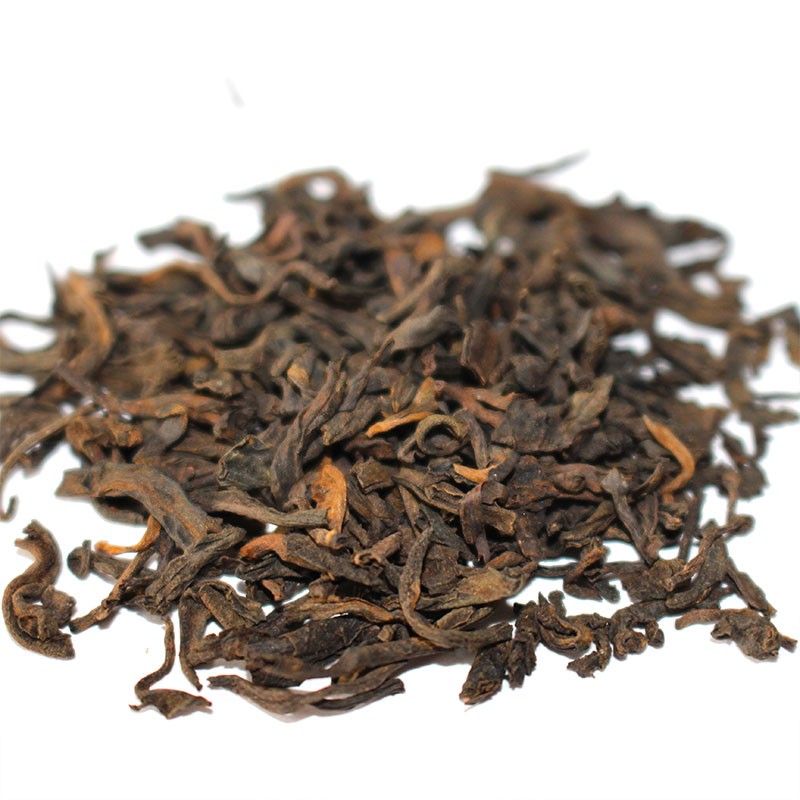
Produced and matured in Yunnan, the 2010 loose-leaf Puer Shu tea has a smooth, deep profile, characterized by earthy and woody notes accompanied by delicate floral nuances. The liquor, deep red tending toward brown, offers a sweet, woody aroma and pleasant earthy depth, with a persistent honeysuckle note on the finish. Place of origin: Simao, Puer, Yunnan, China. Production: the 2010 loose-leaf Puer Shu tea was hand-picked in July 2010 in the Simao area of Yunnan. The raw material comes from mature tea trees and is processed according to the characteristic Puer Shu method. After harvesting, the leaves undergo the initial stages of Puer processing and are then subjected to accelerated fermentation, during which they are kept under controlled temperature and humidity conditions. The activity of microorganisms naturally present in the raw material contributes to the transformations that give the tea its characteristic smooth, deep and earthy profile. At the end of fermentation, the leaves are left to rest and stabilize, thus completing the processing of Puer Shu. The care devoted to the various stages helps define this tea’s distinctive aromatic character. Infusion method: the 2010 loose-leaf Puer Shu is usually served in the Gong Fu style, with Yixing accessories or a gaiwan. The optimal infusion temperature is about 95 °C for lower-quality Puer and 85–89 °C for a good mature and aged raw Puer. The tea is steeped for 12–30 seconds during the first infusions, increasing from 2 to 10 minutes during the final infusions. The prolonged steeping sometimes used in the West may produce dark, bitter and unpleasant infusions. When the traditional Gong Fu method is used, aged Puer can produce many more infusions, with different nuances of flavor.
Price including VAT
Produced and matured in Yunnan, the 2010 loose-leaf Puer Shu tea has a smooth, deep profile, characterized by earthy and woody notes accompanied by delicate floral nuances. The liquor, deep red tending toward brown, offers a sweet, woody aroma and pleasant earthy depth, with a persistent honeysuckle note on the finish. Place of origin: Simao, Puer, Yunnan, China. Production: the 2010 loose-leaf Puer Shu tea was hand-picked in July 2010 in the Simao area of Yunnan. The raw material comes from mature tea trees and is processed according to the characteristic Puer Shu method. After harvesting, the leaves undergo the initial stages of Puer processing and are then subjected to accelerated fermentation, during which they are kept under controlled temperature and humidity conditions. The activity of microorganisms naturally present in the raw material contributes to the transformations that give the tea its characteristic smooth, deep and earthy profile. At the end of fermentation, the leaves are left to rest and stabilize, thus completing the processing of Puer Shu. The care devoted to the various stages helps define this tea’s distinctive aromatic character. Infusion method: the 2010 loose-leaf Puer Shu is usually served in the Gong Fu style, with Yixing accessories or a gaiwan. The optimal infusion temperature is about 95 °C for lower-quality Puer and 85–89 °C for a good mature and aged raw Puer. The tea is steeped for 12–30 seconds during the first infusions, increasing from 2 to 10 minutes during the final infusions. The prolonged steeping sometimes used in the West may produce dark, bitter and unpleasant infusions. When the traditional Gong Fu method is used, aged Puer can produce many more infusions, with different nuances of flavor.