Each product available on the platform is listed and sold by a partner seller identified on the product page. The platform acts as a metasearch/marketplace: it facilitates discovery and checkout, but the sale is made by the seller, who becomes responsible for the transaction.
Shipping is managed directly by the partner seller. The package is sent from the seller's warehouse or logistics network and handed over to the courier. This model enables more efficient deliveries and ensures that order management is handled by the party with actual availability of the product.
On the product page, you will find ingredients, allergens and nutritional information based on the data provided by the seller or producer, namely the official label. If you have allergies or intolerances, we recommend carefully checking the product page before purchasing and contacting the seller with any specific questions.
The platform was created to promote Italian food and make it more accessible. We select sellers in the food e-commerce sector with consistent catalogs and transparent information. Each product is associated with an identifiable seller and a complete information page: we want shopping here to mean buying with confidence.
Delivery times and costs depend on the seller and destination. At checkout, you will always find an updated delivery estimate before confirming payment. For international shipments, times may vary depending on the country and courier.
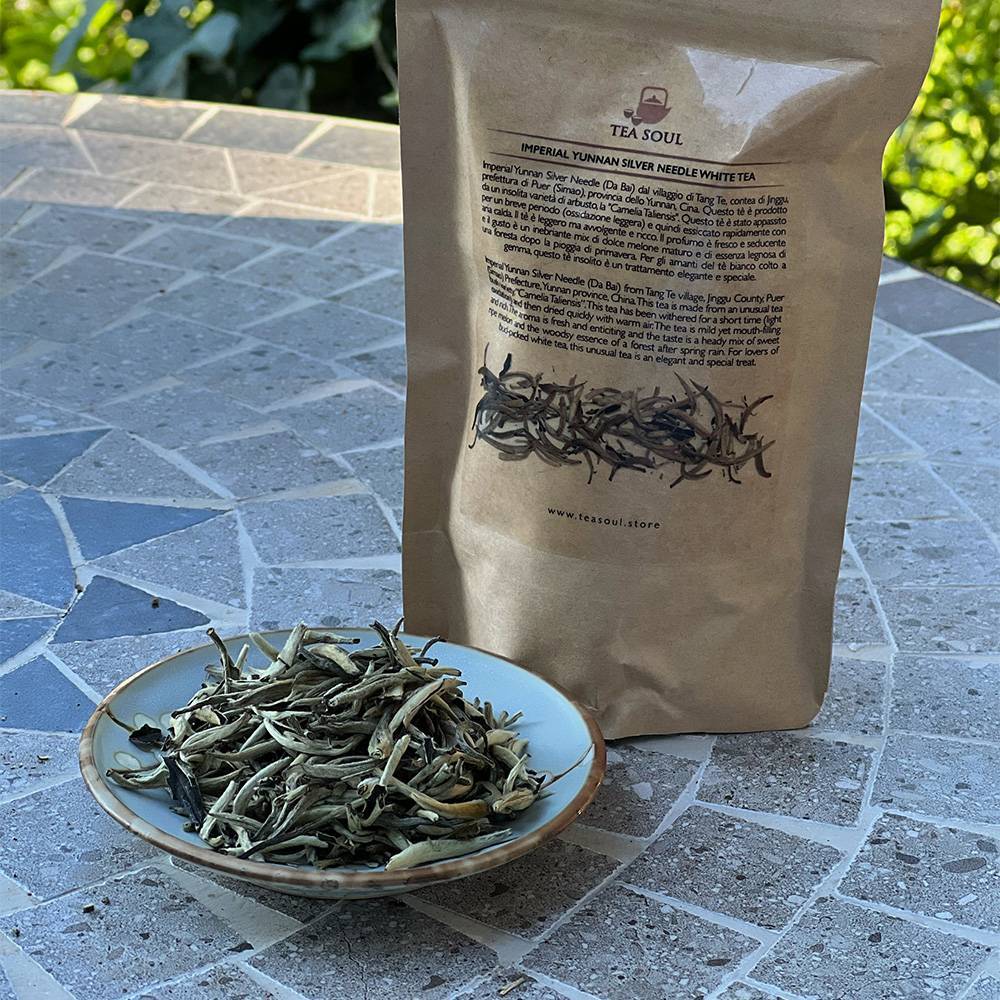
Silver Needle white tea is produced using a particular variety of Camellia sinensis known as Camellia taliensis, widespread in Yunnan. The leaves and buds undergo a brief withering period and are then dried with hot air, using a delicate process that preserves the characteristics of the raw material. For lovers of white teas composed mainly of buds, Silver Needle stands out for its elegant, delicate profile, characterised by a fresh fragrance and pleasant sweetness, accompanied by floral, herbal and slightly woody nuances that may recall a forest after spring rain. Tasting – Appearance and aroma: the buds from which Silver Needle white tea is made are large and silvery, covered with soft hairs (bai hao) that make them gleam like velvet. Once infused, the buds have floral, sweet aromas with a fresh herbal hint of hay. In the cup, the tea is clear and pale yellow with pinkish reflections. The body is light and silky: even when steeped for a long time, this tea never develops astringency or bitterness. Tasting notes – Gong Fu Cha: the first infusion of Silver Needle white tea produces an extremely sweet and delicate liquor, with fresh floral notes and a light hint of hay. In the second infusion, the sweet notes become more defined, reminiscent of sulla honey. The herbal note is always present but never turns into astringency; instead, it gives the liquor freshness and fragrance. The third infusion reveals notes of dried flowers and fruity hints of dehydrated apricot. Western style: the first sip of Silver Needle white tea offers an extremely delicate and floral attack on the palate, reminiscent of wildflowers and dried flowers. The tea then takes on the sweet flavour of acacia honey and refreshing notes, also provided by a very light herbal hay note. Fruity notes of melon and apricot then emerge, fading into a sugary finish: the persistence is sweet and echoes the honey notes perceived earlier. Place of origin: Tang Te Village, Jinggu County, Puer (Simao) Prefecture, Yunnan Province, China. Production: the finest production comes from the first harvests, generally taking place between late March and early April. Only the leaf and buds are picked for Silver Needle white tea. The ideal time is a sunny morning, when the sun is high enough to dry the residual moisture on the buds. Infusion method: to fully appreciate the exquisite shape of Silver Needle white tea, a transparent glass accessory is ideal. First warm the teapot with boiling water, then pour 200 ml of water at 80 °C over approximately 3 grams of tea. The tea buds will begin to float at the top of the teapot. After 5 minutes, some buds will sink to the bottom while others remain at the top. All the buds will then rise vertically, performing a magical dance. An enchanting spectacle to enjoy before drinking the tea. Storage: store Silver Needle white tea in a cool, dry and dark place.
Price including VAT
Silver Needle white tea is produced using a particular variety of Camellia sinensis known as Camellia taliensis, widespread in Yunnan. The leaves and buds undergo a brief withering period and are then dried with hot air, using a delicate process that preserves the characteristics of the raw material. For lovers of white teas composed mainly of buds, Silver Needle stands out for its elegant, delicate profile, characterised by a fresh fragrance and pleasant sweetness, accompanied by floral, herbal and slightly woody nuances that may recall a forest after spring rain. Tasting – Appearance and aroma: the buds from which Silver Needle white tea is made are large and silvery, covered with soft hairs (bai hao) that make them gleam like velvet. Once infused, the buds have floral, sweet aromas with a fresh herbal hint of hay. In the cup, the tea is clear and pale yellow with pinkish reflections. The body is light and silky: even when steeped for a long time, this tea never develops astringency or bitterness. Tasting notes – Gong Fu Cha: the first infusion of Silver Needle white tea produces an extremely sweet and delicate liquor, with fresh floral notes and a light hint of hay. In the second infusion, the sweet notes become more defined, reminiscent of sulla honey. The herbal note is always present but never turns into astringency; instead, it gives the liquor freshness and fragrance. The third infusion reveals notes of dried flowers and fruity hints of dehydrated apricot. Western style: the first sip of Silver Needle white tea offers an extremely delicate and floral attack on the palate, reminiscent of wildflowers and dried flowers. The tea then takes on the sweet flavour of acacia honey and refreshing notes, also provided by a very light herbal hay note. Fruity notes of melon and apricot then emerge, fading into a sugary finish: the persistence is sweet and echoes the honey notes perceived earlier. Place of origin: Tang Te Village, Jinggu County, Puer (Simao) Prefecture, Yunnan Province, China. Production: the finest production comes from the first harvests, generally taking place between late March and early April. Only the leaf and buds are picked for Silver Needle white tea. The ideal time is a sunny morning, when the sun is high enough to dry the residual moisture on the buds. Infusion method: to fully appreciate the exquisite shape of Silver Needle white tea, a transparent glass accessory is ideal. First warm the teapot with boiling water, then pour 200 ml of water at 80 °C over approximately 3 grams of tea. The tea buds will begin to float at the top of the teapot. After 5 minutes, some buds will sink to the bottom while others remain at the top. All the buds will then rise vertically, performing a magical dance. An enchanting spectacle to enjoy before drinking the tea. Storage: store Silver Needle white tea in a cool, dry and dark place.