





The White Peony Bai Mu Dan tea consists of two leaves and a bud, picked in spring and sun-dried. The words "Bai Mu Dan" translate from Chinese as "white peony": the tea received this name for the shape of its leaves, which resemble that of the namesake flower. The white peony is considered a more popular white tea than Bai Hao Yin Zhen, but enthusiasts of the category are often more fond of White Peony Bai Mu Dan due to its aroma and more intense flavor. The leaves and buds of this tea yield a bright, sweet, and fruity liquor with excellent balance, perfect to be consumed cold as well. The fruit notes of Bai Mu Dan are indeed more pronounced than those of Bai Hao Yin Zhen, but not as intense as those of Shou Mei tea. The White Peony Bai Mu Dan tea presents itself with a beautiful mélange of colors ranging from brown to green, both dark and light, up to the silver of the small buds. Once infused, the leaves emit aromas of green wood and gentle vegetal and herbaceous notes, with hints of hawthorn. There are also fragrances of wildflowers and thorny shrubs, as well as sweet and creamy notes of shea butter that can be perceived especially after the second or third infusion in gaiwan. In cup, the liquor is golden, with an intense and bright color. The first infusion of White Peony Bai Mu Dan tea is very pleasant and delicate: notes of linden honey and wildflowers are followed by the sweetness of white sugar and a fresh vegetal taste, reminiscent of fava beans and edamame. With the second infusion, the tea takes on a more decisive character: the floral notes are now of chamomile, and the sweetness takes on a creaminess akin to that of shea butter. One can also perceive fruity hints of peach and apricot jam. The third infusion and thereafter highlight the increasingly intense fruity notes that recall dried apricot with some subtle citrus hints of bergamot. The first sip of White Peony Bai Mu Dan tea gives notes of linden honey and heather, followed by floral notes reminiscent of wildflowers, but also of white flowers, such as jasmine and bitter orange blossoms. The more fruity hints of dried apricot and ripe yellow peach also reach the palate. A delicate vegetal note at the finish with a fresh and sweet character seems to invoke steamed fava beans. In conclusion, a citrus note of lemon and bergamot emerges, enhancing the freshness of this tea. The persistence is long and sweet with honey and vanilla. Place of origin: Southeastern Fujian Province, China. During the harvesting phase of White Peony Bai Mu Dan tea, a bud with two young, immature top leaves is picked, which during drying do not wrinkle nor get twisted: therefore, this tea is often called "two-petal tea". The harvest of this tea can only take place for one month a year, from mid-March to mid-April: this tea should never be harvested on rainy days or days with heavy dew as excess moisture will ruin the young leaves. Thus, the tea is left to wither in the sun for 40 hours before being brought into a closed room to continue the drying process. During drying, the tea is piled up and not spread in a thin layer, as during the processing of Bai Hao Yin Zhen. The tea is then heated very slowly, as too rapid a drying can give the leaves a yellowish tint. It is recommended to store White Peony Bai Mu Dan tea in a cool, dry, and dark place.
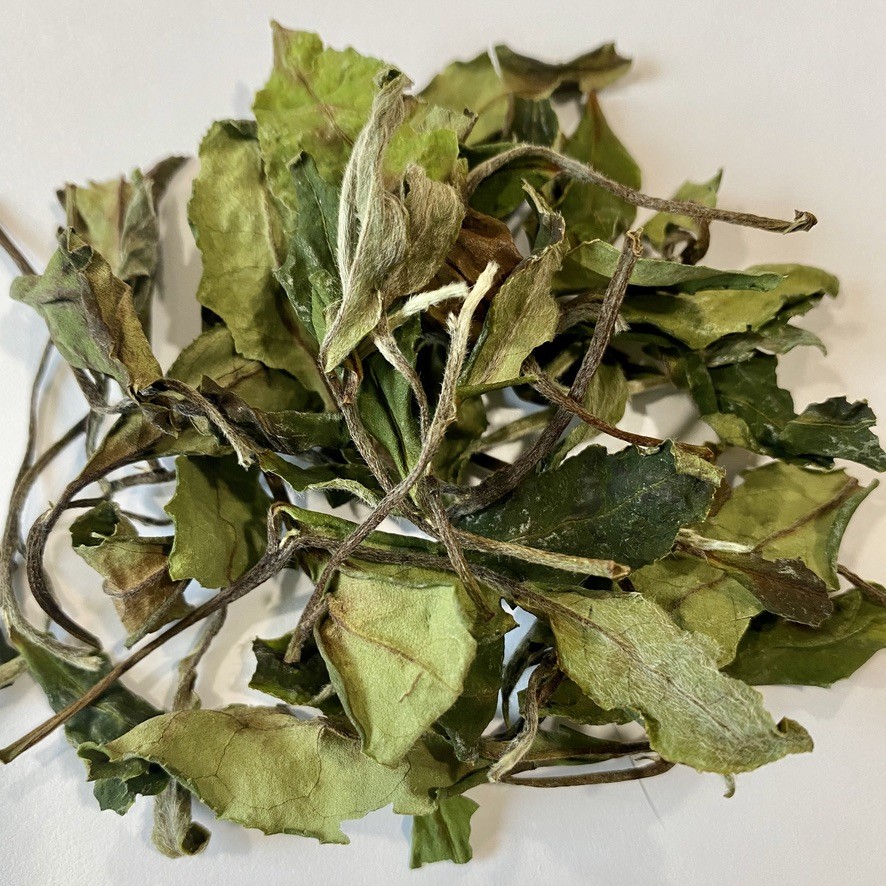
The White Peony Bai Mu Dan tea consists of two leaves and a bud, picked in spring and sun-dried. The words "Bai Mu Dan" translate from Chinese as "white peony": the tea received this name for the shape of its leaves, which resemble that of the namesake flower. The white peony is considered a more popular white tea than Bai Hao Yin Zhen, but enthusiasts of the category are often more fond of White Peony Bai Mu Dan due to its aroma and more intense flavor. The leaves and buds of this tea yield a bright, sweet, and fruity liquor with excellent balance, perfect to be consumed cold as well. The fruit notes of Bai Mu Dan are indeed more pronounced than those of Bai Hao Yin Zhen, but not as intense as those of Shou Mei tea. The White Peony Bai Mu Dan tea presents itself with a beautiful mélange of colors ranging from brown to green, both dark and light, up to the silver of the small buds. Once infused, the leaves emit aromas of green wood and gentle vegetal and herbaceous notes, with hints of hawthorn. There are also fragrances of wildflowers and thorny shrubs, as well as sweet and creamy notes of shea butter that can be perceived especially after the second or third infusion in gaiwan. In cup, the liquor is golden, with an intense and bright color. The first infusion of White Peony Bai Mu Dan tea is very pleasant and delicate: notes of linden honey and wildflowers are followed by the sweetness of white sugar and a fresh vegetal taste, reminiscent of fava beans and edamame. With the second infusion, the tea takes on a more decisive character: the floral notes are now of chamomile, and the sweetness takes on a creaminess akin to that of shea butter. One can also perceive fruity hints of peach and apricot jam. The third infusion and thereafter highlight the increasingly intense fruity notes that recall dried apricot with some subtle citrus hints of bergamot. The first sip of White Peony Bai Mu Dan tea gives notes of linden honey and heather, followed by floral notes reminiscent of wildflowers, but also of white flowers, such as jasmine and bitter orange blossoms. The more fruity hints of dried apricot and ripe yellow peach also reach the palate. A delicate vegetal note at the finish with a fresh and sweet character seems to invoke steamed fava beans. In conclusion, a citrus note of lemon and bergamot emerges, enhancing the freshness of this tea. The persistence is long and sweet with honey and vanilla. Place of origin: Southeastern Fujian Province, China. During the harvesting phase of White Peony Bai Mu Dan tea, a bud with two young, immature top leaves is picked, which during drying do not wrinkle nor get twisted: therefore, this tea is often called "two-petal tea". The harvest of this tea can only take place for one month a year, from mid-March to mid-April: this tea should never be harvested on rainy days or days with heavy dew as excess moisture will ruin the young leaves. Thus, the tea is left to wither in the sun for 40 hours before being brought into a closed room to continue the drying process. During drying, the tea is piled up and not spread in a thin layer, as during the processing of Bai Hao Yin Zhen. The tea is then heated very slowly, as too rapid a drying can give the leaves a yellowish tint. It is recommended to store White Peony Bai Mu Dan tea in a cool, dry, and dark place.
Price VAT included