Each product available on the platform is listed and sold by a partner seller identified on the product page. The platform acts as a metasearch/marketplace: it facilitates discovery and checkout, but the sale is made by the seller, who becomes responsible for the transaction.
Shipping is managed directly by the partner seller. The package is sent from the seller's warehouse or logistics network and handed over to the courier. This model enables more efficient deliveries and ensures that order management is handled by the party with actual availability of the product.
On the product page, you will find ingredients, allergens and nutritional information based on the data provided by the seller or producer, namely the official label. If you have allergies or intolerances, we recommend carefully checking the product page before purchasing and contacting the seller with any specific questions.
The platform was created to promote Italian food and make it more accessible. We select sellers in the food e-commerce sector with consistent catalogs and transparent information. Each product is associated with an identifiable seller and a complete information page: we want shopping here to mean buying with confidence.
Delivery times and costs depend on the seller and destination. At checkout, you will always find an updated delivery estimate before confirming payment. For international shipments, times may vary depending on the country and courier.
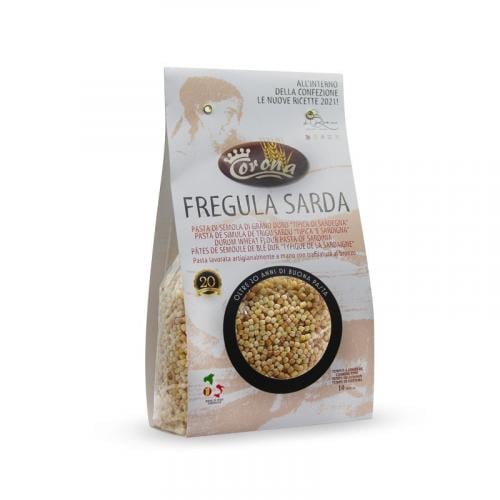
Sardinian fregula is a type of pasta typical of Sardinia, particularly the Campidano area. The ancient origins of Sardinian fregula Sardinian fregula has an ancient history: it is said to have been brought to Sardinia by the Arabs during their rule, when the island was part of the Arab-Islamic Empire. However, there are also theories that Sardinian fregula may have more ancient origins linked to the culinary tradition of the pre-Roman Sardinian peoples. In any case, Sardinian fregula has become an important part of Sardinian cuisine and today is served in many restaurants on the island, both as a main course and as an accompaniment to meat, fish and vegetables. A unique and original pasta shape The distinctive feature of fregula is its shape: these irregular “crumbs” of pasta, varying more or less in size, are made by kneading a mixture based on durum wheat semolina and water for a long time. To obtain the spherical shape, the dough is then rolled between the fingers in a circular motion. The pasta is then toasted in the oven, taking on a darker colour and an inimitable flavour.
Price including VAT
Sardinian fregula is a type of pasta typical of Sardinia, particularly the Campidano area. The ancient origins of Sardinian fregula Sardinian fregula has an ancient history: it is said to have been brought to Sardinia by the Arabs during their rule, when the island was part of the Arab-Islamic Empire. However, there are also theories that Sardinian fregula may have more ancient origins linked to the culinary tradition of the pre-Roman Sardinian peoples. In any case, Sardinian fregula has become an important part of Sardinian cuisine and today is served in many restaurants on the island, both as a main course and as an accompaniment to meat, fish and vegetables. A unique and original pasta shape The distinctive feature of fregula is its shape: these irregular “crumbs” of pasta, varying more or less in size, are made by kneading a mixture based on durum wheat semolina and water for a long time. To obtain the spherical shape, the dough is then rolled between the fingers in a circular motion. The pasta is then toasted in the oven, taking on a darker colour and an inimitable flavour.