Each product available on the platform is listed and sold by a partner seller identified on the product page. The platform acts as a metasearch/marketplace: it facilitates discovery and checkout, but the sale is made by the seller, who becomes responsible for the transaction.
Shipping is managed directly by the partner seller. The package is sent from the seller's warehouse or logistics network and handed over to the courier. This model enables more efficient deliveries and ensures that order management is handled by the party with actual availability of the product.
On the product page, you will find ingredients, allergens and nutritional information based on the data provided by the seller or producer, namely the official label. If you have allergies or intolerances, we recommend carefully checking the product page before purchasing and contacting the seller with any specific questions.
The platform was created to promote Italian food and make it more accessible. We select sellers in the food e-commerce sector with consistent catalogs and transparent information. Each product is associated with an identifiable seller and a complete information page: we want shopping here to mean buying with confidence.
Delivery times and costs depend on the seller and destination. At checkout, you will always find an updated delivery estimate before confirming payment. For international shipments, times may vary depending on the country and courier.
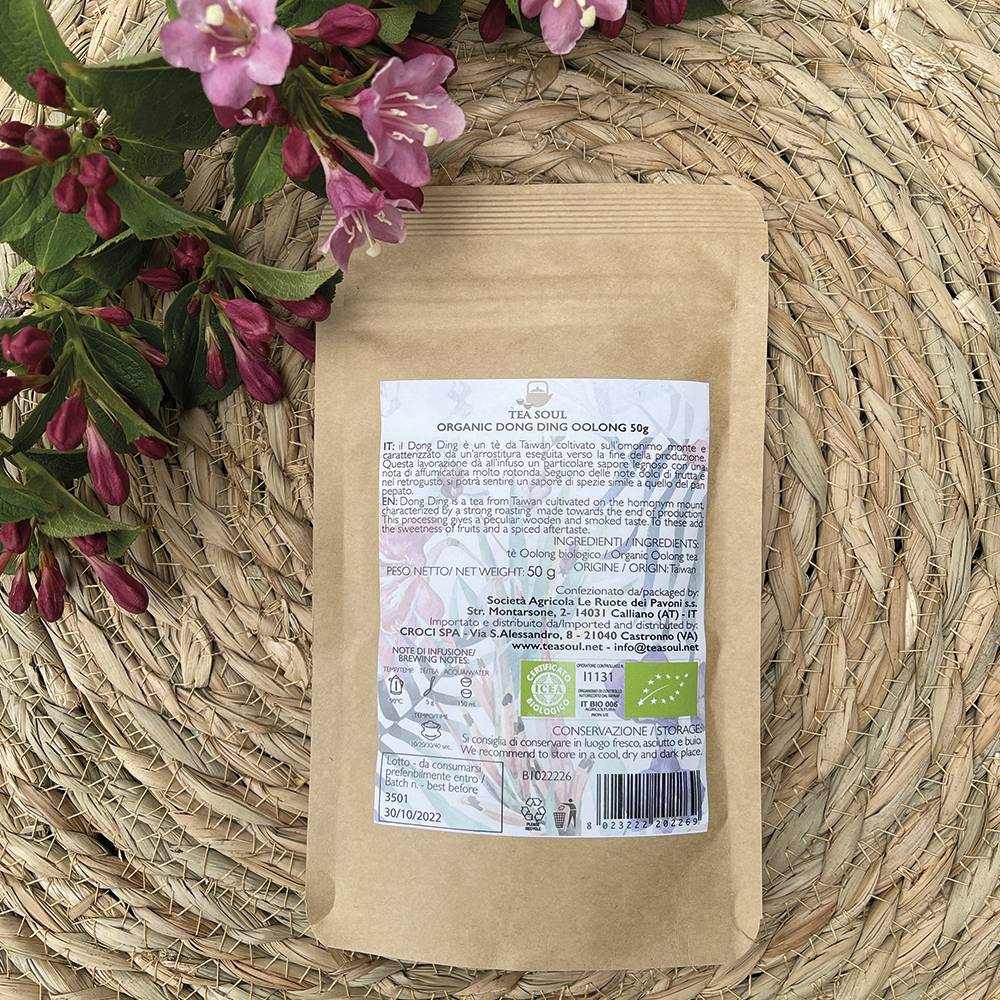
Roasted Dong Ding is one of Taiwan’s best-known oolongs. Its name, translatable as “icy peak”, refers to Mount Dong Ding in the Lugu area of Nantou Prefecture, one of the historic production areas for Taiwanese oolongs. Dong Ding is a mountain oolong whose history is linked to tea plants introduced to Taiwan from China more than a century ago, with cultivars and processing techniques also traceable to the tradition of the Wuyi Mountains in Fujian. Depending on the producer, Dong Ding may have very different profiles, determined by the oxidation level and, above all, by the method and intensity of roasting. This Dong Ding has approximately 20% oxidation and undergoes pronounced roasting, giving the leaves a characteristic copper-brown color similar to the bark of a young tree. Tasting – Appearance and aroma The organic Dong Ding oolong leaves are tightly balled, matte brown with copper and ochre nuances. Once infused, they release notes of roasted hazelnut, toasted bread, burnt caramel, charcoal, coffee beans and a slight floral note. The liquor is bright, clear amber. Tasting Notes GONG FU CHA The first Eastern-style infusion has roasted hazelnut and coffee aromas, followed by sweet, creamy notes of toffee, frothed milk and cream. A pleasant scent of dark bread crust is also surprising. In the second infusion, the roasted coffee and milky notes seem to merge into a flavor reminiscent of cappuccino. Sweetness also appears as almond brittle, with a fleeting vegetal note. The third and later infusions reveal a distinctive damp-earth note immediately followed by caramel sweetness. The body is medium-dense, with a roasted finish and a sugary sensation that lingers on the tongue. WESTERN STYLE The first notes are roasted: hazelnut, coffee beans and rye bread. At the center, the tea is sweet, with caramel, milk and toffee notes enveloping the palate with extraordinary softness. A floral orchid note appears on the finish, while the aftertaste is roasted and milky. Origin Lugu, Nantou Prefecture, Taiwan. Production After harvesting, the leaves are sun-withered for several hours and then transferred indoors, where withering continues on bamboo trays. Oxidation is initiated by gently manipulating the leaves according to traditional oolong-processing techniques. For this Dong Ding, with approximately 20% oxidation, the process is stopped by heating, which stabilizes the leaves and preserves their characteristic character. The leaves are then shaped and rolled by hand until they acquire their characteristic balled form. The tea may undergo one or more roasting cycles, whose intensity helps define its aromatic and gustatory profile. After drying further reduces residual moisture and stabilizes the leaf shape, the tea is ready for packaging. Preparation We strongly recommend the traditional Chinese method (Gong Fu Cha). Use 4.5 grams of leaves (approximately 3 teaspoons) in a gaiwan of about 100 ml for multiple infusions with different flavors. After quickly rinsing the leaves in water at 90 °C, infuse for 15 seconds. Keeping the water at the same temperature, increase the time by 10 seconds for each successive infusion (15–25–35...). This tea can provide approximately 7 infusions. For a classic Western-style preparation, use 2 grams of leaves (approximately 1 teaspoon) in a 150 ml cup, with water at 90 °C for 1½ minutes. If experimenting with different quantities, use enough leaves to allow them to expand freely in the liquid without being compressed or obstructed. This allows maximum extraction of the flavor compounds. The tea may be strained for easier tasting. The infusion times above are purely indicative and may be adjusted according to personal taste. Store in a cool, dry place away from direct sunlight.
Price including VAT
Roasted Dong Ding is one of Taiwan’s best-known oolongs. Its name, translatable as “icy peak”, refers to Mount Dong Ding in the Lugu area of Nantou Prefecture, one of the historic production areas for Taiwanese oolongs. Dong Ding is a mountain oolong whose history is linked to tea plants introduced to Taiwan from China more than a century ago, with cultivars and processing techniques also traceable to the tradition of the Wuyi Mountains in Fujian. Depending on the producer, Dong Ding may have very different profiles, determined by the oxidation level and, above all, by the method and intensity of roasting. This Dong Ding has approximately 20% oxidation and undergoes pronounced roasting, giving the leaves a characteristic copper-brown color similar to the bark of a young tree. Tasting – Appearance and aroma The organic Dong Ding oolong leaves are tightly balled, matte brown with copper and ochre nuances. Once infused, they release notes of roasted hazelnut, toasted bread, burnt caramel, charcoal, coffee beans and a slight floral note. The liquor is bright, clear amber. Tasting Notes GONG FU CHA The first Eastern-style infusion has roasted hazelnut and coffee aromas, followed by sweet, creamy notes of toffee, frothed milk and cream. A pleasant scent of dark bread crust is also surprising. In the second infusion, the roasted coffee and milky notes seem to merge into a flavor reminiscent of cappuccino. Sweetness also appears as almond brittle, with a fleeting vegetal note. The third and later infusions reveal a distinctive damp-earth note immediately followed by caramel sweetness. The body is medium-dense, with a roasted finish and a sugary sensation that lingers on the tongue. WESTERN STYLE The first notes are roasted: hazelnut, coffee beans and rye bread. At the center, the tea is sweet, with caramel, milk and toffee notes enveloping the palate with extraordinary softness. A floral orchid note appears on the finish, while the aftertaste is roasted and milky. Origin Lugu, Nantou Prefecture, Taiwan. Production After harvesting, the leaves are sun-withered for several hours and then transferred indoors, where withering continues on bamboo trays. Oxidation is initiated by gently manipulating the leaves according to traditional oolong-processing techniques. For this Dong Ding, with approximately 20% oxidation, the process is stopped by heating, which stabilizes the leaves and preserves their characteristic character. The leaves are then shaped and rolled by hand until they acquire their characteristic balled form. The tea may undergo one or more roasting cycles, whose intensity helps define its aromatic and gustatory profile. After drying further reduces residual moisture and stabilizes the leaf shape, the tea is ready for packaging. Preparation We strongly recommend the traditional Chinese method (Gong Fu Cha). Use 4.5 grams of leaves (approximately 3 teaspoons) in a gaiwan of about 100 ml for multiple infusions with different flavors. After quickly rinsing the leaves in water at 90 °C, infuse for 15 seconds. Keeping the water at the same temperature, increase the time by 10 seconds for each successive infusion (15–25–35...). This tea can provide approximately 7 infusions. For a classic Western-style preparation, use 2 grams of leaves (approximately 1 teaspoon) in a 150 ml cup, with water at 90 °C for 1½ minutes. If experimenting with different quantities, use enough leaves to allow them to expand freely in the liquid without being compressed or obstructed. This allows maximum extraction of the flavor compounds. The tea may be strained for easier tasting. The infusion times above are purely indicative and may be adjusted according to personal taste. Store in a cool, dry place away from direct sunlight.