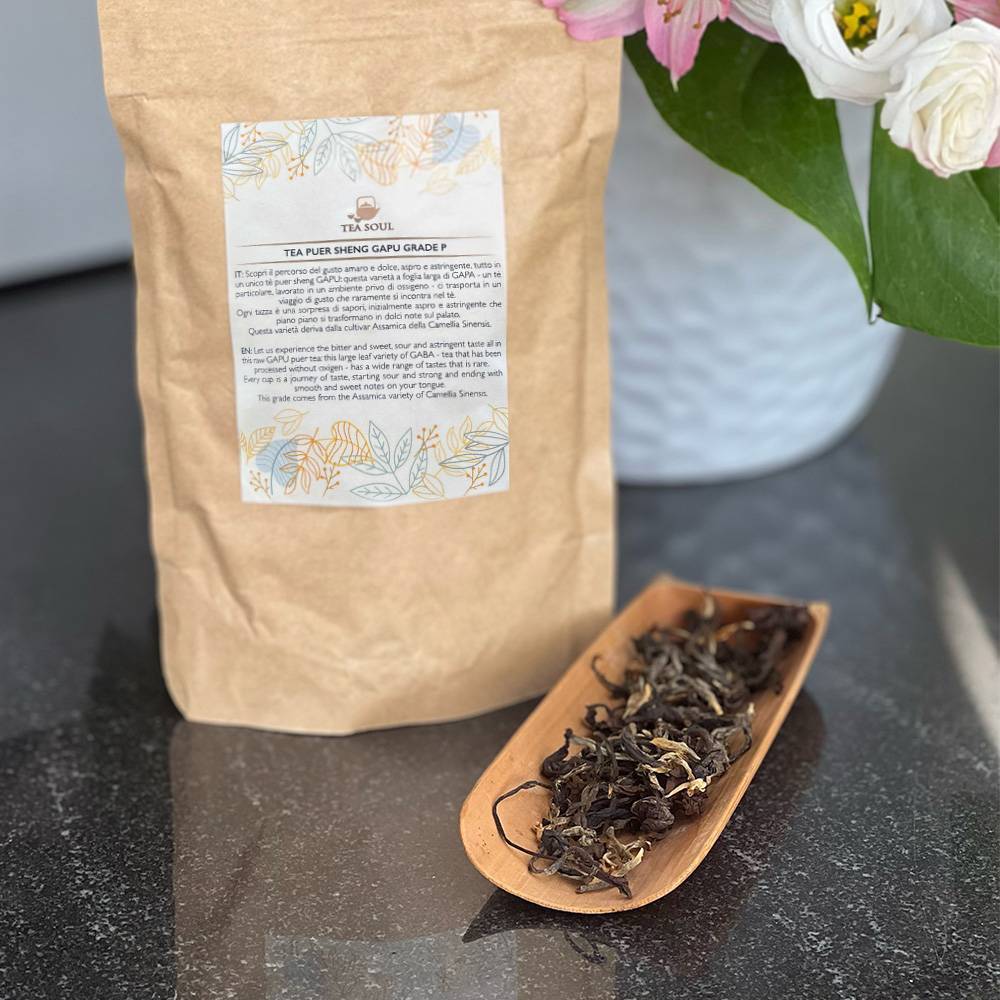
Discover the simultaneously sweet and tangy taste of Puer Sheng Tea GABA GAPU Grade P: this is a broad-leaf variety of GABA, a special tea processed in an oxygen-free environment, which thus develops gamma-aminobutyric acid, an excellent ally against stress and high blood pressure. Each cup is a surprise of flavors, ranging from tangy red fruits to balsamic and sweet notes. The leaves of this tea, grown and harvested in Myanmar and then processed according to Taiwanese techniques, derive from the Assamica cultivar of Camellia Sinensis. Tasting - Sight and smell. The large rolled leaves of Puer Sheng Tea GAPU Grade P have variegated shades, from coppery brown to black, and many golden buds. Even before being steeped, they release sweet aromas of pipe tobacco and vaguely fruity notes. Once infused, we can perceive a balsamic aroma of wood and bark that almost recalls eucalyptus, as well as fruity notes of plum. The liquor is amber in color and the body of this tea is medium-bodied, round, and enveloping. The astringency is light and in perfect balance with the sweet notes. A complex and elegant tea, with highly relaxing properties and a surprising taste. Gong Fu Cha Tasting Notes. The first infusion of Puer Sheng Tea GAPU Grade P gives a liquor that is sweet and sour at the same time, with hints of currant and plum. Then emerge notes of delicate wood, vaguely balsamic, recalling eucalyptus and camphor. With the second infusion we find hints of cooked fruit and red fruit compote: the sweet taste tends to prevail over the tangy one. The third infusion instead highlights the balsamic hints, as well as the woody notes and the fruit acidity, notes perfectly balanced by the sweetness and softness of the liquor. In the Western style. A first sip of Puer Sheng Tea GAPU Grade P brings with it gentle notes of slightly balsamic wood. The taste is sweet and recalls cooked fruit and plum juice, with a pleasant, well-balanced acidity that cleanses the mouth. There are hints of red fruits, such as currant and raspberry, and a few spicy notes also emerge at the finish. The persistence is long and fruity, with a good balance between tangy and sweet. Place of origin: Myanmar. Preparation: we strongly recommend infusing this Puer Sheng Tea GAPU Grade P using the traditional Chinese method (Gong Fu Cha) with a gaiwan of about 150 ml capacity. Following this preparation, with 5 grams of leaves you can make multiple infusions useful to best capture all the flavor nuances of the tea. Heat the water to 90 °C and proceed with a first infusion of 15 seconds. Keeping the water at the same temperature, you can then continue to use the same leaves by adding more water and increasing the infusion time by 5 seconds each time (15 - 20 - 25...). This tea has a longevity of about 8-9 infusions. For a more classic Western-style preparation, we recommend 3 grams of leaves in a 200 ml cup with water at 90 °C for an infusion time of 3 minutes. For a better tasting experience, we suggest filtering the tea as soon as the infusion time is over. The infusion times we suggest can be slightly adjusted to taste to obtain a more or less intense flavor. Store in a cool, dry place away from direct sunlight.
Price VAT included
Discover the simultaneously sweet and tangy taste of Puer Sheng Tea GABA GAPU Grade P: this is a broad-leaf variety of GABA, a special tea processed in an oxygen-free environment, which thus develops gamma-aminobutyric acid, an excellent ally against stress and high blood pressure. Each cup is a surprise of flavors, ranging from tangy red fruits to balsamic and sweet notes. The leaves of this tea, grown and harvested in Myanmar and then processed according to Taiwanese techniques, derive from the Assamica cultivar of Camellia Sinensis. Tasting - Sight and smell. The large rolled leaves of Puer Sheng Tea GAPU Grade P have variegated shades, from coppery brown to black, and many golden buds. Even before being steeped, they release sweet aromas of pipe tobacco and vaguely fruity notes. Once infused, we can perceive a balsamic aroma of wood and bark that almost recalls eucalyptus, as well as fruity notes of plum. The liquor is amber in color and the body of this tea is medium-bodied, round, and enveloping. The astringency is light and in perfect balance with the sweet notes. A complex and elegant tea, with highly relaxing properties and a surprising taste. Gong Fu Cha Tasting Notes. The first infusion of Puer Sheng Tea GAPU Grade P gives a liquor that is sweet and sour at the same time, with hints of currant and plum. Then emerge notes of delicate wood, vaguely balsamic, recalling eucalyptus and camphor. With the second infusion we find hints of cooked fruit and red fruit compote: the sweet taste tends to prevail over the tangy one. The third infusion instead highlights the balsamic hints, as well as the woody notes and the fruit acidity, notes perfectly balanced by the sweetness and softness of the liquor. In the Western style. A first sip of Puer Sheng Tea GAPU Grade P brings with it gentle notes of slightly balsamic wood. The taste is sweet and recalls cooked fruit and plum juice, with a pleasant, well-balanced acidity that cleanses the mouth. There are hints of red fruits, such as currant and raspberry, and a few spicy notes also emerge at the finish. The persistence is long and fruity, with a good balance between tangy and sweet. Place of origin: Myanmar. Preparation: we strongly recommend infusing this Puer Sheng Tea GAPU Grade P using the traditional Chinese method (Gong Fu Cha) with a gaiwan of about 150 ml capacity. Following this preparation, with 5 grams of leaves you can make multiple infusions useful to best capture all the flavor nuances of the tea. Heat the water to 90 °C and proceed with a first infusion of 15 seconds. Keeping the water at the same temperature, you can then continue to use the same leaves by adding more water and increasing the infusion time by 5 seconds each time (15 - 20 - 25...). This tea has a longevity of about 8-9 infusions. For a more classic Western-style preparation, we recommend 3 grams of leaves in a 200 ml cup with water at 90 °C for an infusion time of 3 minutes. For a better tasting experience, we suggest filtering the tea as soon as the infusion time is over. The infusion times we suggest can be slightly adjusted to taste to obtain a more or less intense flavor. Store in a cool, dry place away from direct sunlight.