The high level of oxidation of Oolong Peach Tea gives a soft and intense taste in its sweetness, reminiscent in many ways of red tea. However, the most surprising feature is the flavoring process with natural peach essence, which makes this tea pleasant to drink both cold and hot. The amber liquor caresses the taste buds with fruity and sweet notes, lightly toasted, without the creamy notes of Taiwanese oolong being overshadowed or hidden by the peach essence. A perfectly balanced mix that enhances every component of aroma and taste. Tasting - Sight and smell The leaves of Oolong Peach tea are tightly rolled and small, with colors ranging from brown to chestnut with some ochre tips. The aroma of peach is already perceptible, though the explosion of aromas occurs by infusing the leaves in water and letting them open gradually: thus notes of peach, toasted notes and minerals, hints of biscuit and dark bread crust, and a vague and surprising hint of milk chocolate at the end are unleashed. The liquor in the cup is orange-amber, bright and rich in beautiful golden reflections. Tasting Notes GONG FU CHA The first infusion of Oolong Peach tea has fruity notes of yellow peach and sweet hints: it is velvet on the palate with a sustained and creamy body even in the first infusion. With the second infusion, in addition to peach, the notes of tea emerge: sweet and biscuity notes, malty hints, and a finish of dried fruit, with a triumph of pecans and almonds. With the third infusion and the subsequent ones, as the leaves open in the gaiwan, the character of the base Taiwanese oolong becomes increasingly clear: sweet, fruity (dried fruit), but also with some fleeting floral nuances and a sweetness of honey and crème caramel, enveloping and soft on the palate. TO THE WESTERNER Initially, Oolong Peach tea presents fruity notes of peach and sweet hints of honey that then evolve into notes of dried fruit, such as roasted almonds and walnuts, as the oolong reveals its distinctive flavors. Thus, the creamier notes typical of gaoshan also appear, reminiscent of a pudding or a vaguely caramelized spoon dessert, while the body becomes increasingly dense and enveloping. A tea that presents no bitterness or astringency and whose fruity and sweet persistence accompanies us for a long time, with notes of honey and peach lingering pleasantly on the palate. Place of origin Ming Jian, located in Nantou County, Taiwan. Infusion method for Oolong Peach Tea We highly recommend infusing Oolong Peach Tea using the traditional Chinese method (Gong Fu Cha) with a gaiwan of about 150 ml capacity. Following this preparation, with 5 grams of leaves, you can make infusions that capture all the nuances of the tea's flavor. After a brief rinse of the leaves with water at a temperature of 85°C, proceed with a first infusion of 30 seconds. Keeping the water at the same temperature, you can then continue to use the same leaves by adding more water and increasing the infusion time by 10 seconds each time (30-40-50...). This tea has a longevity of 4 infusions. For a more classic preparation according to western style, we recommend 3 grams of leaves (about 2 teaspoons) in a 200 ml cup with water at 85°C for an infusion time of 3 minutes. For a better tasting experience, we suggest filtering the infusion immediately after the infusion time is complete. However, the infusion times we suggest can also be slightly modified to your liking for a more or less intense taste. It is recommended to store in a cool, dry place away from direct sunlight. Benefits of Oolong tea The principal benefits that can be derived from oolong teas come from the significant content of minerals and antioxidant phenols present in the leaves. Some studies, in fact, report that daily intake of oolong tea can affect bone health by improving the concentration of minerals in this tissue and promoting a decrease in blood sugar thanks to the stimulating effect of phenols on insulin. Oolong teas also generally have a low caffeine concentration. This characteristic makes them suitable to be consumed at any time of the day even by people more sensitive to this stimulating substance.
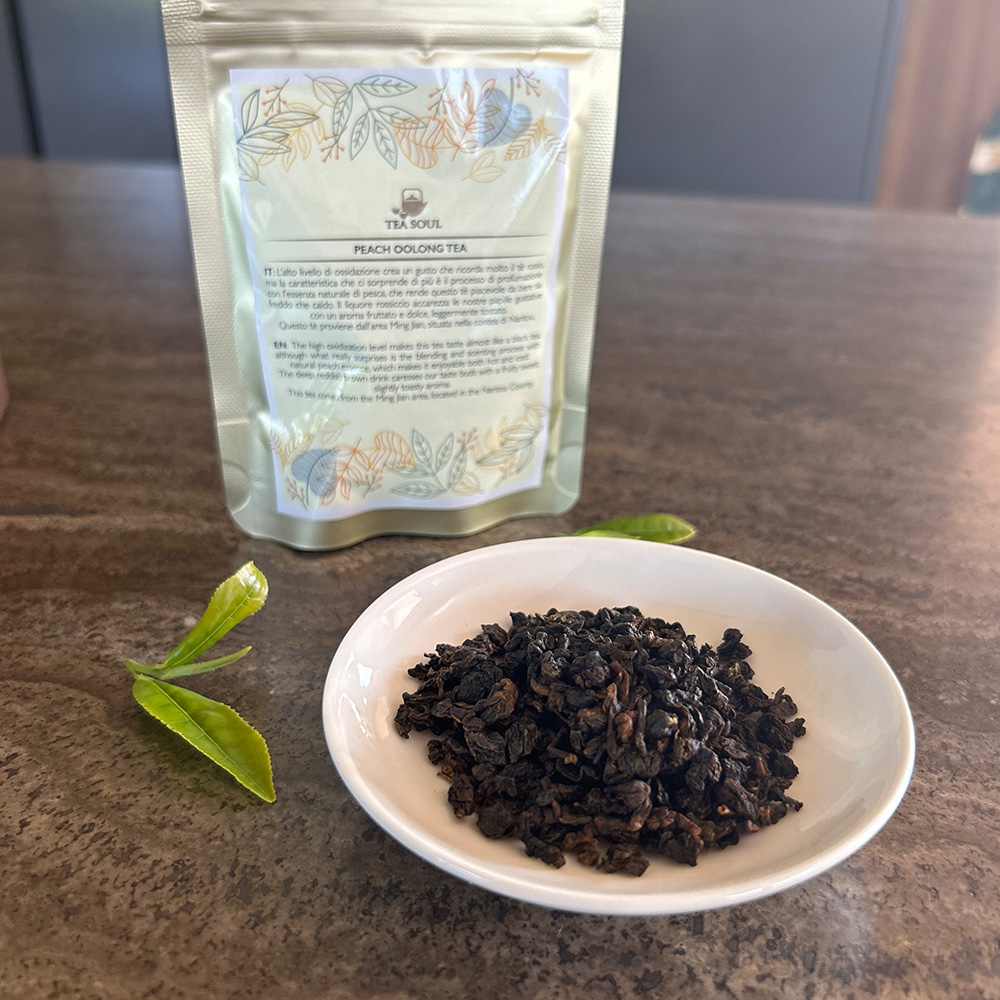
The high level of oxidation of Oolong Peach Tea gives a soft and intense taste in its sweetness, reminiscent in many ways of red tea. However, the most surprising feature is the flavoring process with natural peach essence, which makes this tea pleasant to drink both cold and hot. The amber liquor caresses the taste buds with fruity and sweet notes, lightly toasted, without the creamy notes of Taiwanese oolong being overshadowed or hidden by the peach essence. A perfectly balanced mix that enhances every component of aroma and taste. Tasting - Sight and smell The leaves of Oolong Peach tea are tightly rolled and small, with colors ranging from brown to chestnut with some ochre tips. The aroma of peach is already perceptible, though the explosion of aromas occurs by infusing the leaves in water and letting them open gradually: thus notes of peach, toasted notes and minerals, hints of biscuit and dark bread crust, and a vague and surprising hint of milk chocolate at the end are unleashed. The liquor in the cup is orange-amber, bright and rich in beautiful golden reflections. Tasting Notes GONG FU CHA The first infusion of Oolong Peach tea has fruity notes of yellow peach and sweet hints: it is velvet on the palate with a sustained and creamy body even in the first infusion. With the second infusion, in addition to peach, the notes of tea emerge: sweet and biscuity notes, malty hints, and a finish of dried fruit, with a triumph of pecans and almonds. With the third infusion and the subsequent ones, as the leaves open in the gaiwan, the character of the base Taiwanese oolong becomes increasingly clear: sweet, fruity (dried fruit), but also with some fleeting floral nuances and a sweetness of honey and crème caramel, enveloping and soft on the palate. TO THE WESTERNER Initially, Oolong Peach tea presents fruity notes of peach and sweet hints of honey that then evolve into notes of dried fruit, such as roasted almonds and walnuts, as the oolong reveals its distinctive flavors. Thus, the creamier notes typical of gaoshan also appear, reminiscent of a pudding or a vaguely caramelized spoon dessert, while the body becomes increasingly dense and enveloping. A tea that presents no bitterness or astringency and whose fruity and sweet persistence accompanies us for a long time, with notes of honey and peach lingering pleasantly on the palate. Place of origin Ming Jian, located in Nantou County, Taiwan. Infusion method for Oolong Peach Tea We highly recommend infusing Oolong Peach Tea using the traditional Chinese method (Gong Fu Cha) with a gaiwan of about 150 ml capacity. Following this preparation, with 5 grams of leaves, you can make infusions that capture all the nuances of the tea's flavor. After a brief rinse of the leaves with water at a temperature of 85°C, proceed with a first infusion of 30 seconds. Keeping the water at the same temperature, you can then continue to use the same leaves by adding more water and increasing the infusion time by 10 seconds each time (30-40-50...). This tea has a longevity of 4 infusions. For a more classic preparation according to western style, we recommend 3 grams of leaves (about 2 teaspoons) in a 200 ml cup with water at 85°C for an infusion time of 3 minutes. For a better tasting experience, we suggest filtering the infusion immediately after the infusion time is complete. However, the infusion times we suggest can also be slightly modified to your liking for a more or less intense taste. It is recommended to store in a cool, dry place away from direct sunlight. Benefits of Oolong tea The principal benefits that can be derived from oolong teas come from the significant content of minerals and antioxidant phenols present in the leaves. Some studies, in fact, report that daily intake of oolong tea can affect bone health by improving the concentration of minerals in this tissue and promoting a decrease in blood sugar thanks to the stimulating effect of phenols on insulin. Oolong teas also generally have a low caffeine concentration. This characteristic makes them suitable to be consumed at any time of the day even by people more sensitive to this stimulating substance.
Price VAT included