Each product available on the platform is listed and sold by a partner seller identified on the product page. The platform acts as a metasearch/marketplace: it facilitates discovery and checkout, but the sale is made by the seller, who becomes responsible for the transaction.
Shipping is managed directly by the partner seller. The package is sent from the seller's warehouse or logistics network and handed over to the courier. This model enables more efficient deliveries and ensures that order management is handled by the party with actual availability of the product.
On the product page, you will find ingredients, allergens and nutritional information based on the data provided by the seller or producer, namely the official label. If you have allergies or intolerances, we recommend carefully checking the product page before purchasing and contacting the seller with any specific questions.
The platform was created to promote Italian food and make it more accessible. We select sellers in the food e-commerce sector with consistent catalogs and transparent information. Each product is associated with an identifiable seller and a complete information page: we want shopping here to mean buying with confidence.
Delivery times and costs depend on the seller and destination. At checkout, you will always find an updated delivery estimate before confirming payment. For international shipments, times may vary depending on the country and courier.
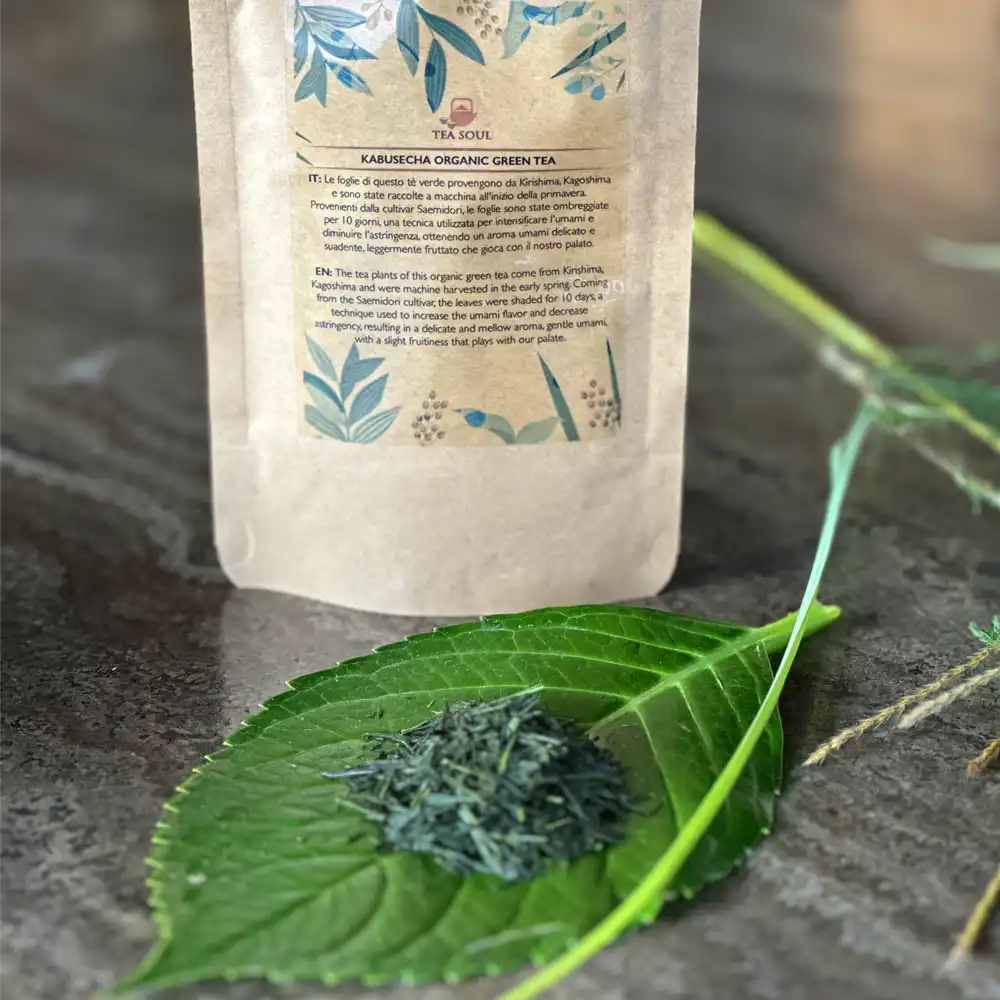
The leaves of Organic Kabusecha Green Tea originate from Koyu, Miyazaki, and were machine-harvested at the beginning of spring. From the Asatsuyu cultivar, this tea is exceptionally refined and well balanced. Its extreme sweetness and softness are distinctive characteristics of Kabusecha, obtained through a period of shading during the final days before harvesting. Its name is composed of the words "kabuse", meaning shade, and "cha", meaning tea. Shading is a particular cultivation technique used to limit direct exposure to sunlight before harvesting, helping define the characteristic aromatic profile and the intense, bright green colour of the leaves. Tasting – Appearance and aroma: organic Kabusecha green tea has very fine, small needle-shaped leaves of excellent quality. The colour alternates between emerald green and brilliant dark green, with a glossy surface. Once infused, they immediately release a sweet, buttery umami aroma, with sweet vegetal notes of early spring leafy greens. The liquor is yellow-green, very light and bright, and rather transparent despite being a Japanese tea. Tasting notes, classic teapot or Kyusu: organic Kabusecha green tea opens with truly remarkable, buttery umami, with sweet and savoury in perfect balance. Vegetal notes follow, reminiscent of pan-fried baby spinach, asparagus tips and roasted carrots, followed by a marine note suggesting the flavour of noble shellfish such as lobster, Dublin Bay prawn and spider crab. The finish is almost floral, with a chamomile note and a soft sensation on the palate. The finish is long and umami, with an incredibly silky body. Place of origin: Koyu, Miyazaki, Japan. Brewing method: place 5 grams of Organic Kabusecha green tea leaves (approximately three teaspoons) in a Japanese Kyusu teapot or, if unavailable, in a teapot preferably with a wide, flat base. Pour 250 ml of water at 70 °C over the leaves and, after one and a half minutes, begin pouring the infusion into the cups. To make the most of the leaves and continue the tasting experience, we also recommend making three more infusions of the same leaves using the same quantity and temperature parameters, but extending the brewing time by 5–10 seconds. The tea may be strained for greater ease when tasting, and the brewing times indicated above are purely guidelines, so they may also be adjusted according to personal taste. As this is a Japanese green tea, it is also possible to make a delicious cold-water infusion before proceeding with hot water. For the latter, using the same grams of leaves per quantity of water, we recommend a brewing time of approximately 10 minutes. Store in a cool, dry place away from direct sunlight.
Price including VAT
The leaves of Organic Kabusecha Green Tea originate from Koyu, Miyazaki, and were machine-harvested at the beginning of spring. From the Asatsuyu cultivar, this tea is exceptionally refined and well balanced. Its extreme sweetness and softness are distinctive characteristics of Kabusecha, obtained through a period of shading during the final days before harvesting. Its name is composed of the words "kabuse", meaning shade, and "cha", meaning tea. Shading is a particular cultivation technique used to limit direct exposure to sunlight before harvesting, helping define the characteristic aromatic profile and the intense, bright green colour of the leaves. Tasting – Appearance and aroma: organic Kabusecha green tea has very fine, small needle-shaped leaves of excellent quality. The colour alternates between emerald green and brilliant dark green, with a glossy surface. Once infused, they immediately release a sweet, buttery umami aroma, with sweet vegetal notes of early spring leafy greens. The liquor is yellow-green, very light and bright, and rather transparent despite being a Japanese tea. Tasting notes, classic teapot or Kyusu: organic Kabusecha green tea opens with truly remarkable, buttery umami, with sweet and savoury in perfect balance. Vegetal notes follow, reminiscent of pan-fried baby spinach, asparagus tips and roasted carrots, followed by a marine note suggesting the flavour of noble shellfish such as lobster, Dublin Bay prawn and spider crab. The finish is almost floral, with a chamomile note and a soft sensation on the palate. The finish is long and umami, with an incredibly silky body. Place of origin: Koyu, Miyazaki, Japan. Brewing method: place 5 grams of Organic Kabusecha green tea leaves (approximately three teaspoons) in a Japanese Kyusu teapot or, if unavailable, in a teapot preferably with a wide, flat base. Pour 250 ml of water at 70 °C over the leaves and, after one and a half minutes, begin pouring the infusion into the cups. To make the most of the leaves and continue the tasting experience, we also recommend making three more infusions of the same leaves using the same quantity and temperature parameters, but extending the brewing time by 5–10 seconds. The tea may be strained for greater ease when tasting, and the brewing times indicated above are purely guidelines, so they may also be adjusted according to personal taste. As this is a Japanese green tea, it is also possible to make a delicious cold-water infusion before proceeding with hot water. For the latter, using the same grams of leaves per quantity of water, we recommend a brewing time of approximately 10 minutes. Store in a cool, dry place away from direct sunlight.