Each product available on the platform is listed and sold by a partner seller identified on the product page. The platform acts as a metasearch/marketplace: it facilitates discovery and checkout, but the sale is made by the seller, who becomes responsible for the transaction.
Shipping is managed directly by the partner seller. The package is sent from the seller's warehouse or logistics network and handed over to the courier. This model enables more efficient deliveries and ensures that order management is handled by the party with actual availability of the product.
On the product page, you will find ingredients, allergens and nutritional information based on the data provided by the seller or producer, namely the official label. If you have allergies or intolerances, we recommend carefully checking the product page before purchasing and contacting the seller with any specific questions.
The platform was created to promote Italian food and make it more accessible. We select sellers in the food e-commerce sector with consistent catalogs and transparent information. Each product is associated with an identifiable seller and a complete information page: we want shopping here to mean buying with confidence.
Delivery times and costs depend on the seller and destination. At checkout, you will always find an updated delivery estimate before confirming payment. For international shipments, times may vary depending on the country and courier.
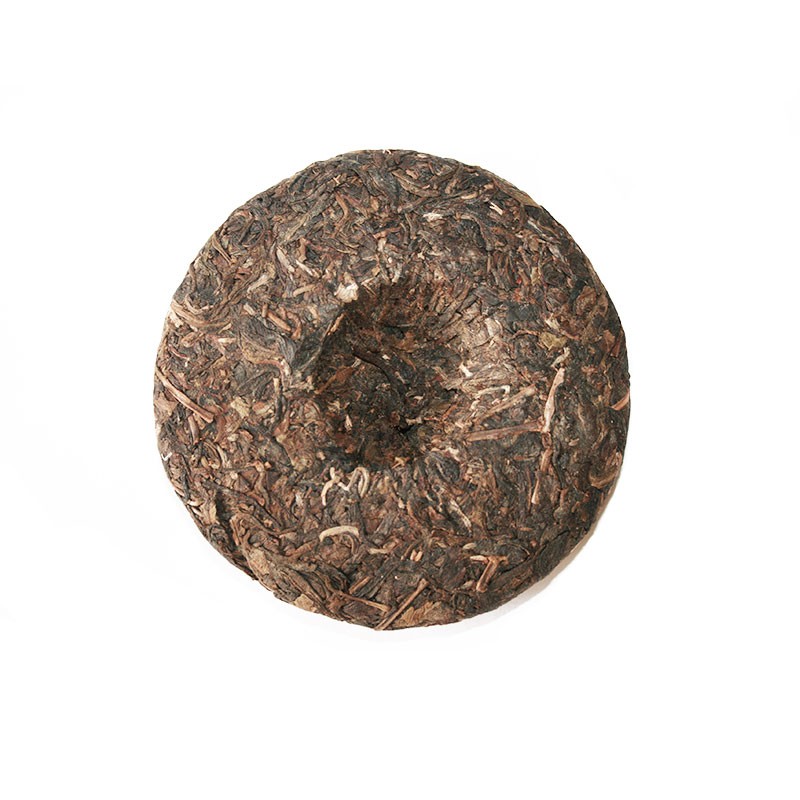
Menghai Puer Sheng (raw) tea comes from the Menghai region in southern Yunnan, within Xishuangbanna Autonomous Prefecture, one of the most important areas for Puer tea production. To understand the great variety of Puers, it is important to consider their origin: for many of these teas, the harvesting location is a distinctive element and may become part of the product’s name. The different areas of Yunnan produce teas with different aromatic profiles, although they share some recurring characteristics. This Puer Sheng, evolving through aging, allows you to appreciate characteristics associated with teas from the Menghai area. In the cup, pronounced mineral character and vegetal notes reminiscent of the forest floor emerge, accompanied by delicate sweetness that develops especially in the aftertaste. Origin Menghai – Yunnan, China. Production After harvesting, the leaves undergo an initial withering stage, generally in the sun, whose duration varies according to environmental conditions and the producer’s choices. This is followed by “killing the green” (sha qing), during which the leaves are heated and manipulated to stop most of the enzymatic activity responsible for oxidation. In Puer Sheng production, this stage is conducted so as to preserve the characteristics needed for the tea’s later evolution during storage. After sha qing, the leaves rest overnight and are then sun-dried. These stages produce maocha, which can be consumed loose or pressed. To obtain the pressed form, the maocha is briefly exposed to steam, making the leaves softer and suitable for shaping. The tea is gathered in cloth or a sack and pressed into the desired form using a stone or mechanical press. Pressing is followed by drying and stabilization, during which the tea gradually loses the residual moisture acquired during steaming. Preparation We strongly recommend preparing Puer Sheng using the traditional Chinese method (Gong Fu Cha), with a gaiwan holding approximately 150 ml. With 5 grams of leaves, this method allows multiple infusions and brings out the tea’s full range of flavors. Heat the water to 90 °C, briefly rinse the leaves, then infuse for 15 seconds. Keeping the water at the same temperature, continue using the same leaves by adding more water and increasing the infusion time by 5 seconds each time (15–20–25...). This tea can provide approximately 8 infusions. For a more classic Western-style preparation, use 2.5 grams of leaves in a 200 ml cup, with water at 90 °C for 2½ minutes. For the best tasting experience, strain the tea as soon as the infusion time is complete. Suggested infusion times may be adjusted to taste for a more or less intense flavor. Store in a cool, dry place away from direct sunlight.
Price including VAT
Menghai Puer Sheng (raw) tea comes from the Menghai region in southern Yunnan, within Xishuangbanna Autonomous Prefecture, one of the most important areas for Puer tea production. To understand the great variety of Puers, it is important to consider their origin: for many of these teas, the harvesting location is a distinctive element and may become part of the product’s name. The different areas of Yunnan produce teas with different aromatic profiles, although they share some recurring characteristics. This Puer Sheng, evolving through aging, allows you to appreciate characteristics associated with teas from the Menghai area. In the cup, pronounced mineral character and vegetal notes reminiscent of the forest floor emerge, accompanied by delicate sweetness that develops especially in the aftertaste. Origin Menghai – Yunnan, China. Production After harvesting, the leaves undergo an initial withering stage, generally in the sun, whose duration varies according to environmental conditions and the producer’s choices. This is followed by “killing the green” (sha qing), during which the leaves are heated and manipulated to stop most of the enzymatic activity responsible for oxidation. In Puer Sheng production, this stage is conducted so as to preserve the characteristics needed for the tea’s later evolution during storage. After sha qing, the leaves rest overnight and are then sun-dried. These stages produce maocha, which can be consumed loose or pressed. To obtain the pressed form, the maocha is briefly exposed to steam, making the leaves softer and suitable for shaping. The tea is gathered in cloth or a sack and pressed into the desired form using a stone or mechanical press. Pressing is followed by drying and stabilization, during which the tea gradually loses the residual moisture acquired during steaming. Preparation We strongly recommend preparing Puer Sheng using the traditional Chinese method (Gong Fu Cha), with a gaiwan holding approximately 150 ml. With 5 grams of leaves, this method allows multiple infusions and brings out the tea’s full range of flavors. Heat the water to 90 °C, briefly rinse the leaves, then infuse for 15 seconds. Keeping the water at the same temperature, continue using the same leaves by adding more water and increasing the infusion time by 5 seconds each time (15–20–25...). This tea can provide approximately 8 infusions. For a more classic Western-style preparation, use 2.5 grams of leaves in a 200 ml cup, with water at 90 °C for 2½ minutes. For the best tasting experience, strain the tea as soon as the infusion time is complete. Suggested infusion times may be adjusted to taste for a more or less intense flavor. Store in a cool, dry place away from direct sunlight.