Each product available on the platform is listed and sold by a partner seller identified on the product page. The platform acts as a metasearch/marketplace: it facilitates discovery and checkout, but the sale is made by the seller, who becomes responsible for the transaction.
Shipping is managed directly by the partner seller. The package is sent from the seller's warehouse or logistics network and handed over to the courier. This model enables more efficient deliveries and ensures that order management is handled by the party with actual availability of the product.
On the product page, you will find ingredients, allergens and nutritional information based on the data provided by the seller or producer, namely the official label. If you have allergies or intolerances, we recommend carefully checking the product page before purchasing and contacting the seller with any specific questions.
The platform was created to promote Italian food and make it more accessible. We select sellers in the food e-commerce sector with consistent catalogs and transparent information. Each product is associated with an identifiable seller and a complete information page: we want shopping here to mean buying with confidence.
Delivery times and costs depend on the seller and destination. At checkout, you will always find an updated delivery estimate before confirming payment. For international shipments, times may vary depending on the country and courier.
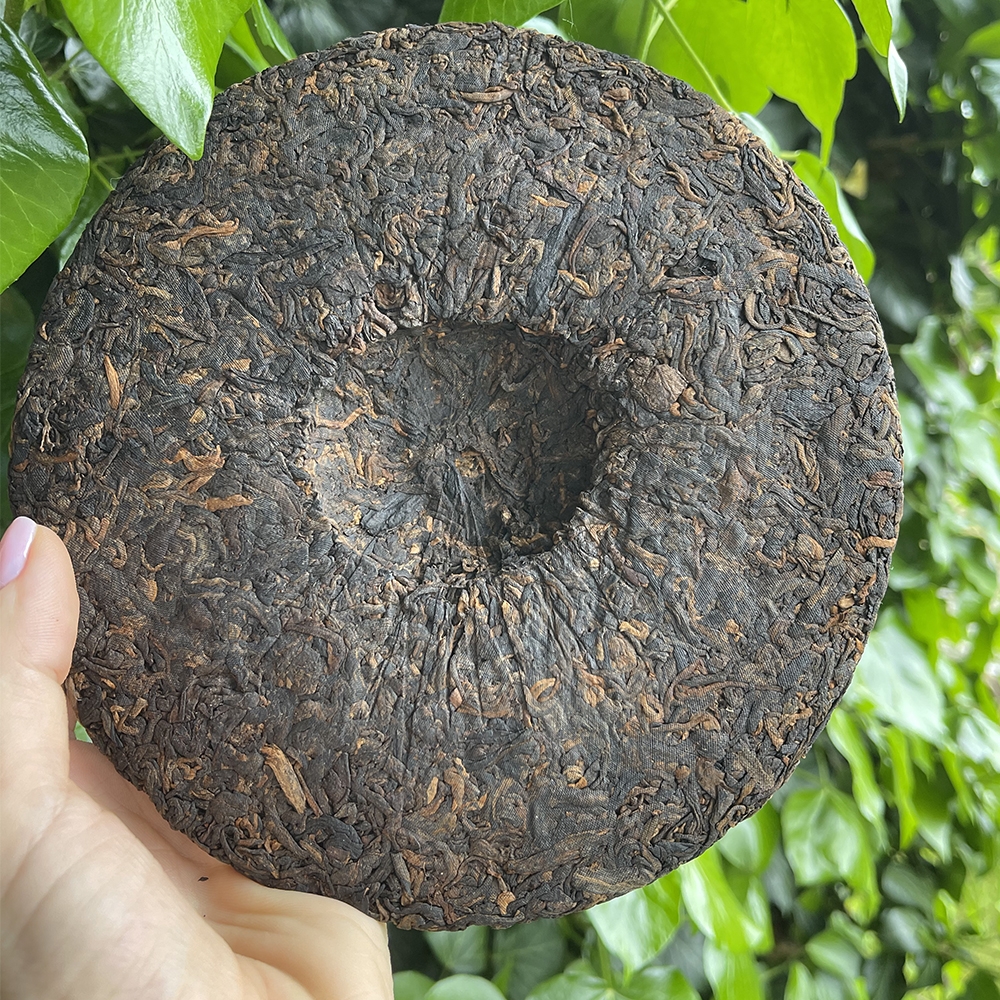
Growing Aroma 2019 Puer Shu Tea (ripe) is a product carefully selected by Tea Soul to offer a tasting experience and deeper knowledge of the complex Puer tea category. The gardens from which the leaves of this Shu come are located near Mengzhe, in Menghai County. Numerous Puer teas come from this area in the far south of Yunnan, Xishuangbanna Province, thanks to the characteristics of the raw material and the presence of skilled tea-processing artisans. The infusion of Growing Aroma 2019 Puer Shu Tea (ripe) has an aromatic profile reflecting the care devoted to processing and fermenting the leaves in the Menghai area. From the beginning, the taste is clean, without pronounced humid notes associated with processing. On the palate, the fermented character of this Puer is expressed through balsamic and woody notes, accompanied by a distinct mineral nuance in the aftertaste. During tasting, there is also a sweetness reminiscent of certain herbal liqueurs and a fragrant aroma of freshly baked bread crumb. The infusion has a balanced, soft body, with a slight dry and balsamic note on the finish. Place of origin: Mengzhe, Menghai County – Yunnan, China. Production: after harvesting, the leaves of Growing Aroma 2019 Puer Shu Tea (ripe) are left to wither in the sun for a period varying according to the producer, before moving to the “kill-green” stage, similar to that used in green tea production. In this case, the leaves are heated less intensely than normally used for green tea, preserving some of the enzymes involved in the leaves’ subsequent evolution. Once heated, the leaves are collected in large quantities and stacked into large piles. The plant material is moistened and covered with cloths, creating the conditions needed to start the accelerated fermentation process typical of Puer Shu. During this stage, the producer periodically turns the leaves and checks their moisture, promoting uniform fermentation. This processing can last from 20 to 70 days. Once fermentation is complete, the leaves are spread out and left in contact with the air to finish drying and stabilize the product. At this point, the Puer may optionally be pressed into a shape suitable for transport and subsequent aging. For pressing, the leaves are exposed for a few seconds to a powerful jet of steam that softens their surface, then collected in a bag or sock that determines their shape, usually disk-shaped. To stabilize the structure, the bag is left for several hours under a stone or mechanical press, while the leaves gradually lose the moisture absorbed during steaming. Infusion method for Growing Aroma 2019 Puer Shu Tea (ripe): we strongly recommend infusing it using the traditional Chinese method (Gong Fu Cha), with a Gaiwan holding approximately 100 ml. With this preparation, 5.5 grams of leaves can be used for multiple infusions to best experience all the tea’s flavors. After quickly rinsing the leaves with water at 100 °C, make a first infusion of 10 seconds. Then, keeping the water at the same temperature, continue using the product by adding more water and increasing the previous infusion time by approximately 10 seconds (10–20–30…). For a more traditional Western-style preparation, use 3 grams of leaves (about 2 teaspoons) in a 150 ml cup with water at 100 °C for one and a half minutes. For the best tasting experience, we suggest filtering the infusion as soon as the established steeping time is complete. The suggested infusion times may be slightly adjusted to obtain a more or less intense taste. Store in a cool, dry place away from direct sunlight.
Price including VAT
Growing Aroma 2019 Puer Shu Tea (ripe) is a product carefully selected by Tea Soul to offer a tasting experience and deeper knowledge of the complex Puer tea category. The gardens from which the leaves of this Shu come are located near Mengzhe, in Menghai County. Numerous Puer teas come from this area in the far south of Yunnan, Xishuangbanna Province, thanks to the characteristics of the raw material and the presence of skilled tea-processing artisans. The infusion of Growing Aroma 2019 Puer Shu Tea (ripe) has an aromatic profile reflecting the care devoted to processing and fermenting the leaves in the Menghai area. From the beginning, the taste is clean, without pronounced humid notes associated with processing. On the palate, the fermented character of this Puer is expressed through balsamic and woody notes, accompanied by a distinct mineral nuance in the aftertaste. During tasting, there is also a sweetness reminiscent of certain herbal liqueurs and a fragrant aroma of freshly baked bread crumb. The infusion has a balanced, soft body, with a slight dry and balsamic note on the finish. Place of origin: Mengzhe, Menghai County – Yunnan, China. Production: after harvesting, the leaves of Growing Aroma 2019 Puer Shu Tea (ripe) are left to wither in the sun for a period varying according to the producer, before moving to the “kill-green” stage, similar to that used in green tea production. In this case, the leaves are heated less intensely than normally used for green tea, preserving some of the enzymes involved in the leaves’ subsequent evolution. Once heated, the leaves are collected in large quantities and stacked into large piles. The plant material is moistened and covered with cloths, creating the conditions needed to start the accelerated fermentation process typical of Puer Shu. During this stage, the producer periodically turns the leaves and checks their moisture, promoting uniform fermentation. This processing can last from 20 to 70 days. Once fermentation is complete, the leaves are spread out and left in contact with the air to finish drying and stabilize the product. At this point, the Puer may optionally be pressed into a shape suitable for transport and subsequent aging. For pressing, the leaves are exposed for a few seconds to a powerful jet of steam that softens their surface, then collected in a bag or sock that determines their shape, usually disk-shaped. To stabilize the structure, the bag is left for several hours under a stone or mechanical press, while the leaves gradually lose the moisture absorbed during steaming. Infusion method for Growing Aroma 2019 Puer Shu Tea (ripe): we strongly recommend infusing it using the traditional Chinese method (Gong Fu Cha), with a Gaiwan holding approximately 100 ml. With this preparation, 5.5 grams of leaves can be used for multiple infusions to best experience all the tea’s flavors. After quickly rinsing the leaves with water at 100 °C, make a first infusion of 10 seconds. Then, keeping the water at the same temperature, continue using the product by adding more water and increasing the previous infusion time by approximately 10 seconds (10–20–30…). For a more traditional Western-style preparation, use 3 grams of leaves (about 2 teaspoons) in a 150 ml cup with water at 100 °C for one and a half minutes. For the best tasting experience, we suggest filtering the infusion as soon as the established steeping time is complete. The suggested infusion times may be slightly adjusted to obtain a more or less intense taste. Store in a cool, dry place away from direct sunlight.