Each product available on the platform is listed and sold by a partner seller identified on the product page. The platform acts as a metasearch/marketplace: it facilitates discovery and checkout, but the sale is made by the seller, who becomes responsible for the transaction.
Shipping is managed directly by the partner seller. The package is sent from the seller's warehouse or logistics network and handed over to the courier. This model enables more efficient deliveries and ensures that order management is handled by the party with actual availability of the product.
On the product page, you will find ingredients, allergens and nutritional information based on the data provided by the seller or producer, namely the official label. If you have allergies or intolerances, we recommend carefully checking the product page before purchasing and contacting the seller with any specific questions.
The platform was created to promote Italian food and make it more accessible. We select sellers in the food e-commerce sector with consistent catalogs and transparent information. Each product is associated with an identifiable seller and a complete information page: we want shopping here to mean buying with confidence.
Delivery times and costs depend on the seller and destination. At checkout, you will always find an updated delivery estimate before confirming payment. For international shipments, times may vary depending on the country and courier.
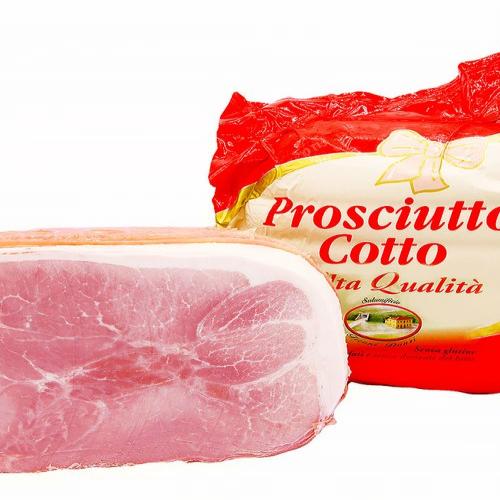
The cooked ham from Salumificio Freoni Danzi is classified as a high-quality product, originally made from selected legs, flavored with spices and flavorings, steam-cooked, vacuum-packed and pasteurized. Cooked Ham: Historical background Cooked ham is a food with a long history and tradition, dating back to ancient Rome, where traces of recipes for processing pork have been found. Cooked ham is nothing more than a “large roast,” and its discovery is therefore attributed to the Romans who, during wars in the regions of Northern Europe, sought to facilitate the cooking of roasted pork leg by boiling it in water and flavorings. Its production requires several essential stages: selecting and slaughtering the pig, processing the hind leg, steam cooking and packaging. How can you tell whether a ham is of good quality? Quality depends on the amount of water present in the meat; in particular, the moister the ham, the lower its quality. You must also pay attention to what you buy, as cooked ham is often replaced by a very similar but less valuable product: cooked pork shoulder. Cooked Ham: three different qualities You may not know that, following a 2005 decree from the Ministry of Productive Activities, there are three categories of this cured meat, reflecting three quality levels. The product simply called “cooked ham” is the basic product, made by processing the pork leg. This category includes all hams with a moisture content of 81% or less. The second category is called “selected cooked ham”: to qualify, at least three of the four main muscles of the pork leg must be visible, and its moisture content must be 78.5% or less. The third category is “high-quality cooked ham,” which, unlike selected cooked ham, is more valuable and sought-after because it must be made using a boneless leg; its processing produces ham with a moisture content below 75.5%.
Price including VAT
The cooked ham from Salumificio Freoni Danzi is classified as a high-quality product, originally made from selected legs, flavored with spices and flavorings, steam-cooked, vacuum-packed and pasteurized. Cooked Ham: Historical background Cooked ham is a food with a long history and tradition, dating back to ancient Rome, where traces of recipes for processing pork have been found. Cooked ham is nothing more than a “large roast,” and its discovery is therefore attributed to the Romans who, during wars in the regions of Northern Europe, sought to facilitate the cooking of roasted pork leg by boiling it in water and flavorings. Its production requires several essential stages: selecting and slaughtering the pig, processing the hind leg, steam cooking and packaging. How can you tell whether a ham is of good quality? Quality depends on the amount of water present in the meat; in particular, the moister the ham, the lower its quality. You must also pay attention to what you buy, as cooked ham is often replaced by a very similar but less valuable product: cooked pork shoulder. Cooked Ham: three different qualities You may not know that, following a 2005 decree from the Ministry of Productive Activities, there are three categories of this cured meat, reflecting three quality levels. The product simply called “cooked ham” is the basic product, made by processing the pork leg. This category includes all hams with a moisture content of 81% or less. The second category is called “selected cooked ham”: to qualify, at least three of the four main muscles of the pork leg must be visible, and its moisture content must be 78.5% or less. The third category is “high-quality cooked ham,” which, unlike selected cooked ham, is more valuable and sought-after because it must be made using a boneless leg; its processing produces ham with a moisture content below 75.5%.