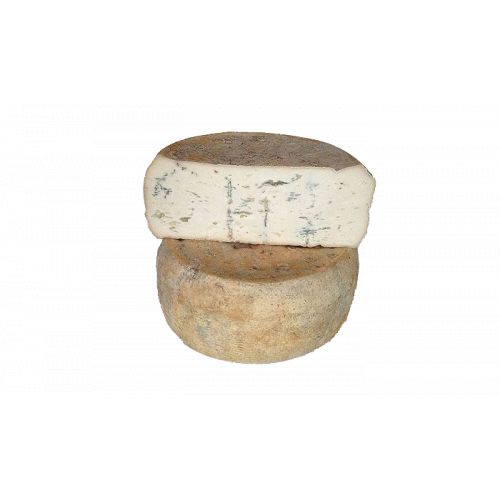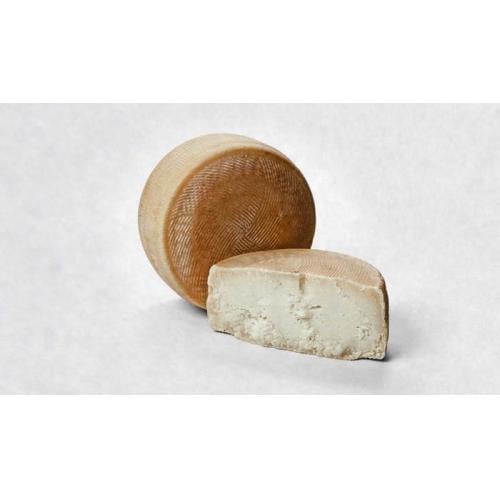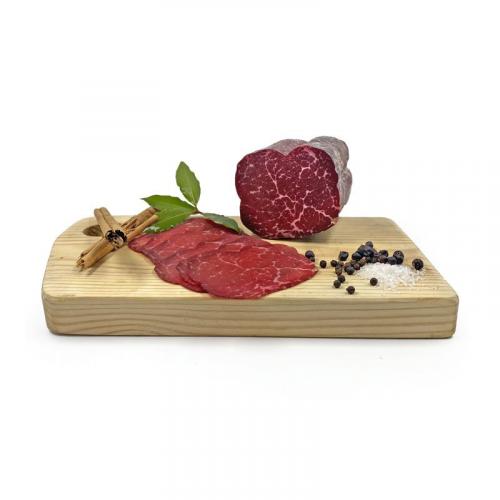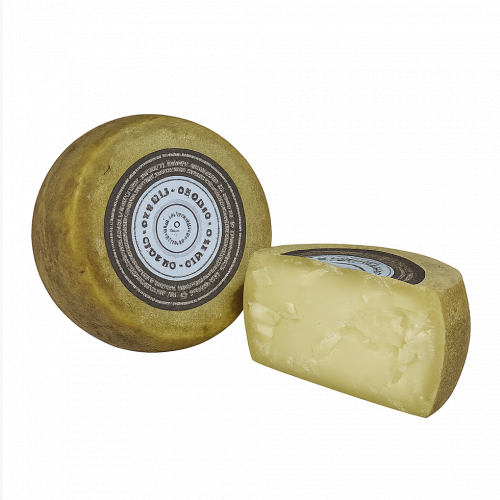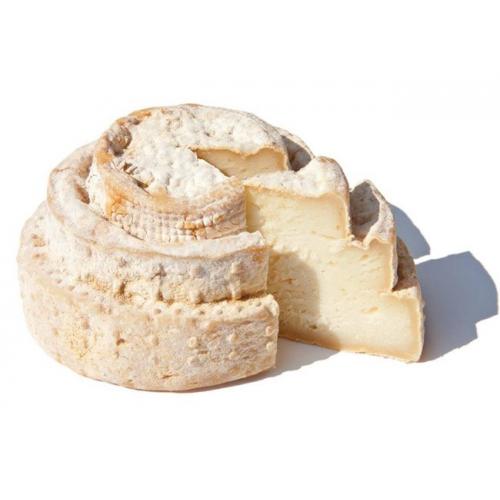
The Piedmontese Montébore from Società Cooperativa Agricola Vallenostra is a real delicacy! It is a truly unique cheese that has managed to survive the passage of centuries and overcome periods of difficulty in which it risked disappearing forever. This cheese takes its name from the village of the same name, a hamlet in the municipality of Dernice, in Val Curone in the province of Alessandria, on the watershed between the Grue and Borbera valleys, where it has been produced for centuries. It is made using a blend of raw cow's milk (70%) and sheep's milk (30%), an element that gives it a unique and inimitable flavor. Its curious shape, resembling a classic multi-tiered wedding cake, is thought to have been inspired by the ancient ruined tower that stands in the castle of Montébore and is usually created by stacking three robiolas of decreasing diameter. The Montebore: its history. A cheese with a centuries-long history, it is thought that its origins even date back to the Late Middle Ages, more precisely to the 9th century, and that they can be linked to the cheesemaking art mastered with great skill by the monks of the Benedictine abbey of Santa Maria di Vendersi, located on Mount Giarolo. However, the production of the Piedmontese Montébore suddenly ceased in the post-war period, a time that saw massive migration from the valleys to the cities, a phenomenon that risked causing the loss of all those peasant traditions that had long been the symbol of the identity of an entire territory. Only in more recent times, and more precisely in 1999, did Maurizio Fava, head of the local Slow Food Presidio, manage to track down Carolina Bracco, the last keeper of the recipe and the traditional cheesemaking technique, and finally bring Montébore back to its former glory, giving new life to its production. Società Cooperativa Agricola Vallenostra was the first producing company in Italy, according to the specifications, to market the Slow Food Presidio Montébore.
Price VAT included
The Piedmontese Montébore from Società Cooperativa Agricola Vallenostra is a real delicacy! It is a truly unique cheese that has managed to survive the passage of centuries and overcome periods of difficulty in which it risked disappearing forever. This cheese takes its name from the village of the same name, a hamlet in the municipality of Dernice, in Val Curone in the province of Alessandria, on the watershed between the Grue and Borbera valleys, where it has been produced for centuries. It is made using a blend of raw cow's milk (70%) and sheep's milk (30%), an element that gives it a unique and inimitable flavor. Its curious shape, resembling a classic multi-tiered wedding cake, is thought to have been inspired by the ancient ruined tower that stands in the castle of Montébore and is usually created by stacking three robiolas of decreasing diameter. The Montebore: its history. A cheese with a centuries-long history, it is thought that its origins even date back to the Late Middle Ages, more precisely to the 9th century, and that they can be linked to the cheesemaking art mastered with great skill by the monks of the Benedictine abbey of Santa Maria di Vendersi, located on Mount Giarolo. However, the production of the Piedmontese Montébore suddenly ceased in the post-war period, a time that saw massive migration from the valleys to the cities, a phenomenon that risked causing the loss of all those peasant traditions that had long been the symbol of the identity of an entire territory. Only in more recent times, and more precisely in 1999, did Maurizio Fava, head of the local Slow Food Presidio, manage to track down Carolina Bracco, the last keeper of the recipe and the traditional cheesemaking technique, and finally bring Montébore back to its former glory, giving new life to its production. Società Cooperativa Agricola Vallenostra was the first producing company in Italy, according to the specifications, to market the Slow Food Presidio Montébore.
Every product available on the marketplace is listed and sold by a partner seller indicated on the product page. The platform acts as a metasearch/marketplace: it facilitates discovery and checkout, but the sale is carried out by the seller, who becomes the party responsible for the transaction.
Shipping is handled directly by the seller partner. The package leaves the seller's warehouse, or its logistics network, and is handed over to the carrier. This model enables more efficient deliveries and ensures that order management is handled by those who actually have the product available.
On the product page you will find ingredients, allergens and nutritional information according to the data provided by the seller or manufacturer, i.e. the official label. If you have allergies or intolerances, we recommend that you carefully check the product page before purchasing and contact the seller with any specific questions.
The platform was created to promote and make Italian food Made in Italy more accessible. We select e-commerce food sellers with coherent catalogs and transparent information. Each product is linked to an identifiable seller and a complete information sheet: we want buying here to mean buying with confidence.
Delivery times and costs depend on the seller and the destination. At checkout you will always find the current delivery estimate before confirming payment. For international shipments, times may vary depending on the country and the carrier.