Each product available on the platform is listed and sold by a partner seller identified on the product page. The platform acts as a metasearch/marketplace: it facilitates discovery and checkout, but the sale is made by the seller, who becomes responsible for the transaction.
Shipping is managed directly by the partner seller. The package is sent from the seller's warehouse or logistics network and handed over to the courier. This model enables more efficient deliveries and ensures that order management is handled by the party with actual availability of the product.
On the product page, you will find ingredients, allergens and nutritional information based on the data provided by the seller or producer, namely the official label. If you have allergies or intolerances, we recommend carefully checking the product page before purchasing and contacting the seller with any specific questions.
The platform was created to promote Italian food and make it more accessible. We select sellers in the food e-commerce sector with consistent catalogs and transparent information. Each product is associated with an identifiable seller and a complete information page: we want shopping here to mean buying with confidence.
Delivery times and costs depend on the seller and destination. At checkout, you will always find an updated delivery estimate before confirming payment. For international shipments, times may vary depending on the country and courier.
 Recipe by
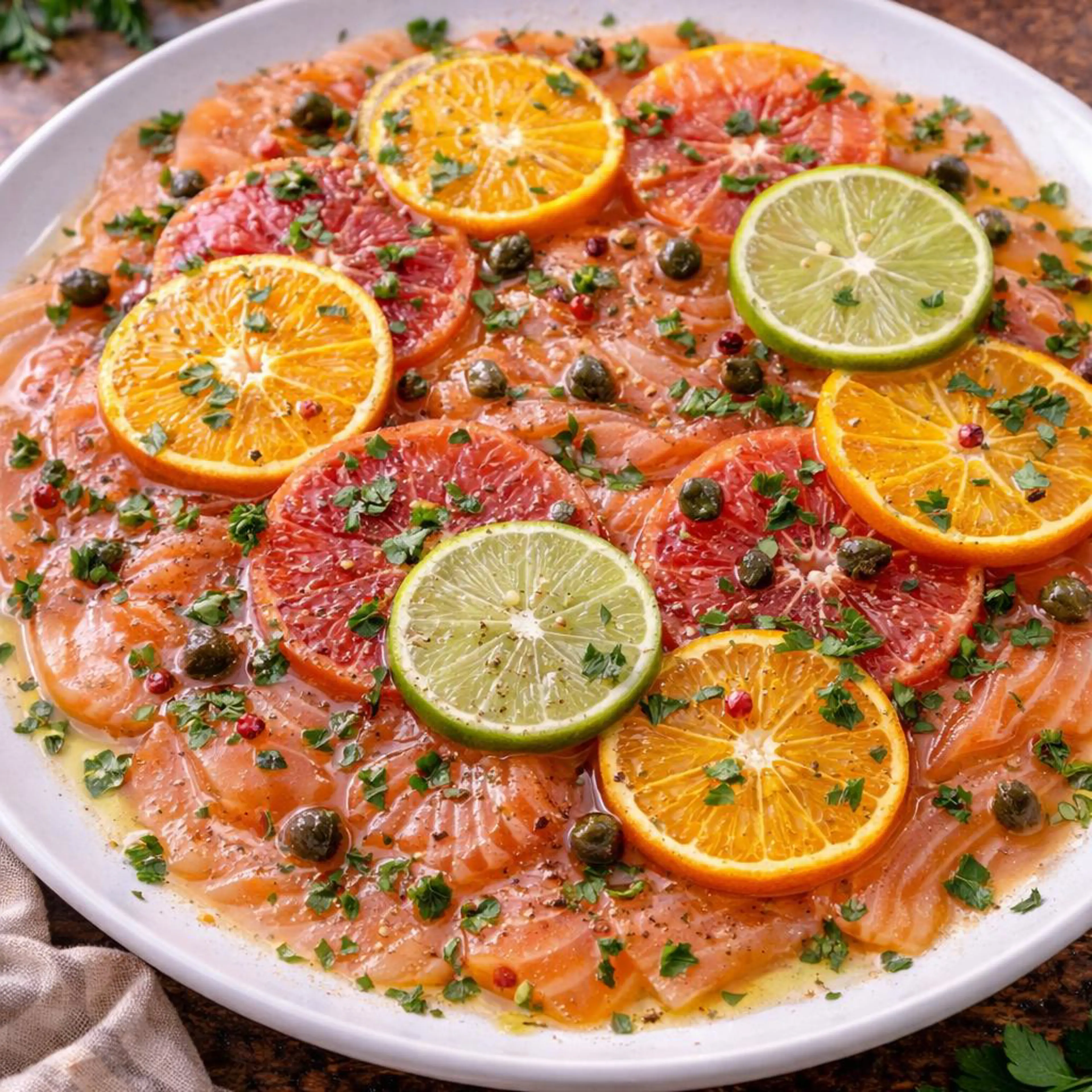
Citrus Salmon Carpaccio is an elegant cold dish made with raw salmon marinated in fresh citrus juice. Perfect as an appetizer or a light main course, it is a pleasure for both the eyes and the palate. The combination of the delicate flavors of salmon and citrus gives the dish freshness and lightness.


Portion: the weight of the ingredients divided by 4 portions, excluding ingredients marked “to taste” and those not considered by the analysis, such as broth. It does not change with the portion selector.
Step 1 of 12: Place the salmon on the cutting board and, using tweezers, gently remove the bones found in the fattest part of the fillet
Step 2 of 12: Take a long, narrow, flexible-bladed knife, lay it almost flat on the fillet, and begin slicing it into thin slices as if it were smoked salmon
Step 3 of 12: As you slice, arrange the slices on the serving plate brushed with 1 tablespoon of oil
Step 4 of 12: Place the salmon in the refrigerator
Step 5 of 12: Peel the orange and lemon alive with a small sharp knife, separating the segments from their membranes
Step 6 of 12: Wash the escarole and the chicory; tear the leaves of the first with your hands and finely slice the second
Step 7 of 12: Place the salmon, the 2 salads, the citrus segments, and a few thin slices of lime in the center of the plate
Step 8 of 12: In a bowl, dissolve the sugar with the remaining lime juice and the juice from the citrus fruits collected while you were peeling them
Step 9 of 12: Season with salt and pepper, add 4 tablespoons of oil and the chopped chives
Step 10 of 12: Mix the dressing well with a whisk, pour it over the salad and fish, and serve fresh
Step 11 of 12: This carpaccio can be prepared differently for those who do not like the idea of eating raw fish. Prepare the citrus juice dressing using half of the oil, pour it only over the fish, and let it marinate for a couple of hours in the refrigerator; the fish will cook in the dressing, becoming opaque in color
Step 12 of 12: Then arrange the salad and citrus fruits in the center of the plate and season them with lemon juice

In summary: Not suitable for vegans · Not suitable for vegetarians · Contains nickel · Allergens detected: Fish
In gray: not detectedDetected
| Average values | Per serving141 g · 1 of 4 | Per 100 g |
|---|---|---|
| Energy | 1,379 kJ330 kcal | 977 kJ233 kcal |
| Fat | 27.06 g | 19.16 g |
| of which saturated fatty acids | 5.16 g | 3.65 g |
| Carbohydrates | 2.68 g | 1.9 g |
| of which sugars | 2.68 g | 1.9 g |
| Fibre | 0.52 g | 0.37 g |
| Protein | 18.81 g | 13.32 g |
| Salt | 0.1 g | 0.07 g |
Calculated based on the recipe ingredients: it does not take traces or the composition of the products you use into account. Automatic analysis, limited to certain aspects: it may contain errors, so always check the label.