Each product available on the platform is listed and sold by a partner seller identified on the product page. The platform acts as a metasearch/marketplace: it facilitates discovery and checkout, but the sale is made by the seller, who becomes responsible for the transaction.
Shipping is managed directly by the partner seller. The package is sent from the seller's warehouse or logistics network and handed over to the courier. This model enables more efficient deliveries and ensures that order management is handled by the party with actual availability of the product.
On the product page, you will find ingredients, allergens and nutritional information based on the data provided by the seller or producer, namely the official label. If you have allergies or intolerances, we recommend carefully checking the product page before purchasing and contacting the seller with any specific questions.
The platform was created to promote Italian food and make it more accessible. We select sellers in the food e-commerce sector with consistent catalogs and transparent information. Each product is associated with an identifiable seller and a complete information page: we want shopping here to mean buying with confidence.
Delivery times and costs depend on the seller and destination. At checkout, you will always find an updated delivery estimate before confirming payment. For international shipments, times may vary depending on the country and courier.
 Recipe by
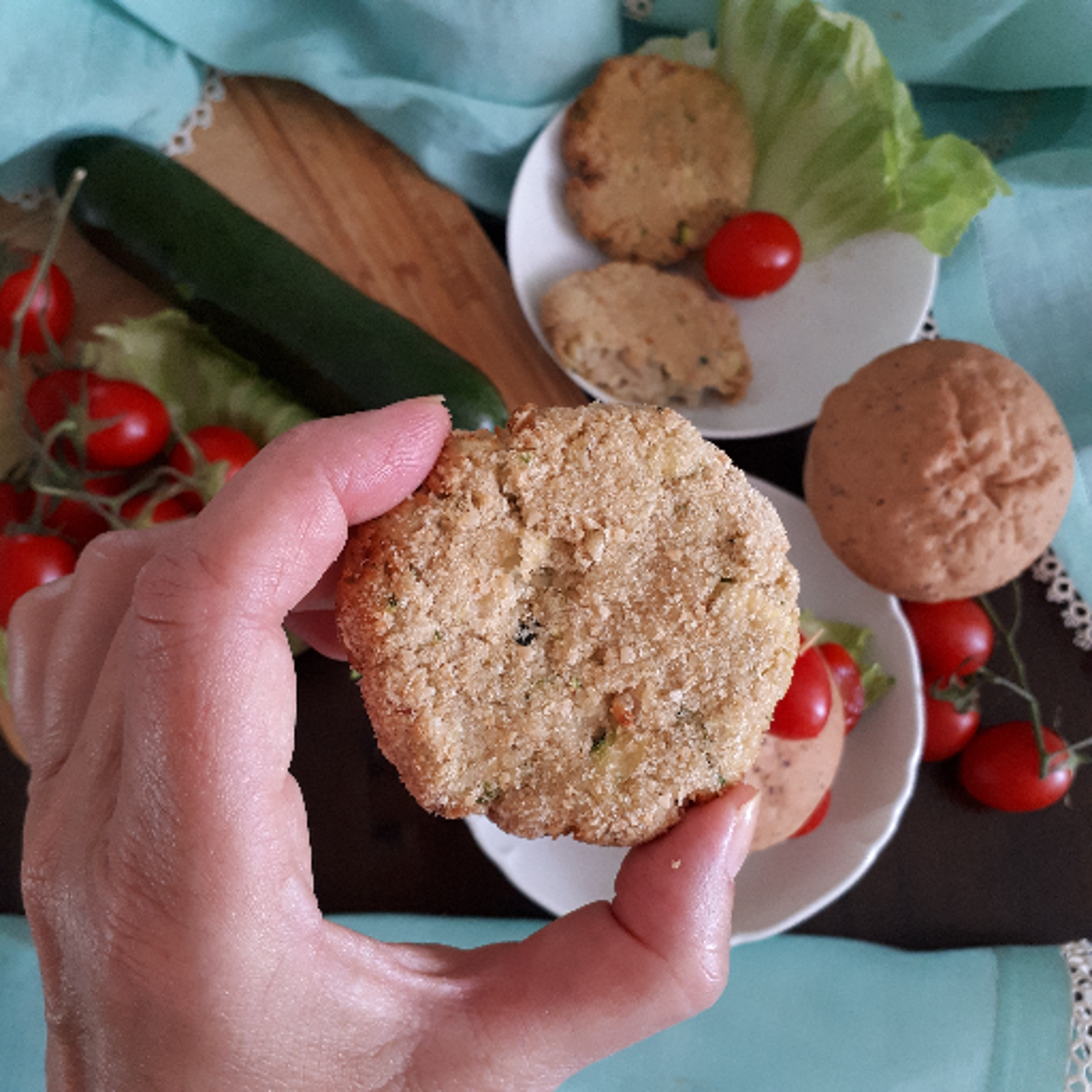
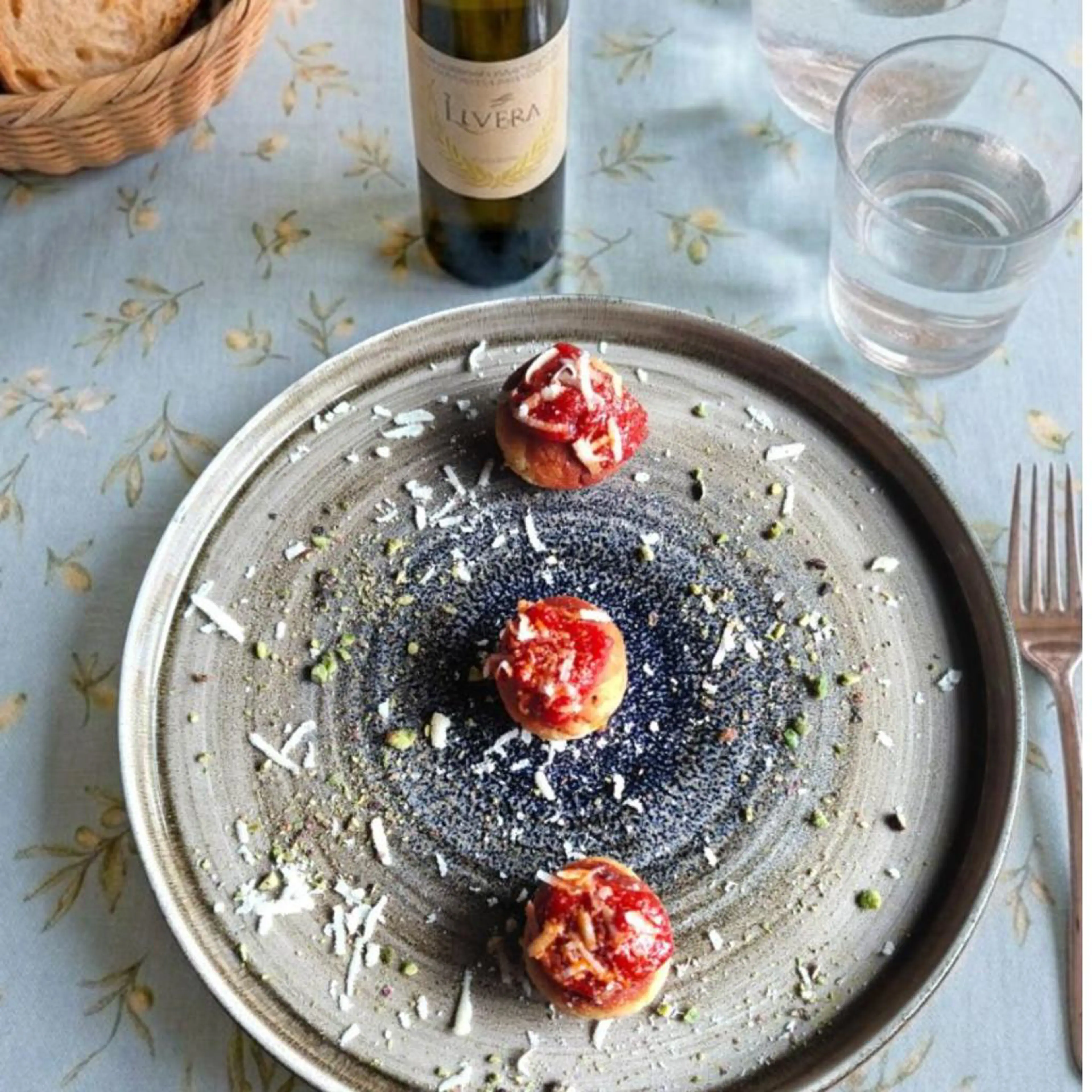
Crispy on the outside and tender on the inside, these meatballs are made with ricotta, pistachios and Parmigiano Reggiano, served on a velvety datterini tomato cream and finished with grated cacio ricotta and extra-virgin olive oil.

Portion: the weight of the ingredients divided by 4 portions, excluding ingredients marked “to taste” and those not considered by the analysis, such as broth. It does not change with the portion selector.
Step 1 of 8: Drain the ricotta well, if necessary, then place it in a large bowl and work it with the egg until obtaining a smooth mixture.
Step 2 of 8: Add the Parmigiano Reggiano and chopped pistachios, then gradually incorporate the breadcrumbs until obtaining a soft but easily workable dough.
Step 3 of 8: Season with salt and shape small meatballs with your hands, trying to keep them uniform to ensure even cooking.
Step 4 of 8: Coat each meatball in breadcrumbs, covering it completely and gently pressing the coating to make it adhere.
Step 5 of 8: Wash the datterini tomatoes, cut them in half and let them soften in a pan with a generous drizzle of extra-virgin olive oil and a pinch of salt.
Step 6 of 8: When the tomatoes are soft, blend them with an immersion blender until obtaining a smooth, velvety cream.
Step 7 of 8: Cook the meatballs in a pan with a little oil, turning them gently, until golden and crisp on the outside.
Step 8 of 8: Spread the datterini tomato cream onto the plates, place the meatballs on top and finish with a generous grating of cacio ricotta and a drizzle of extra-virgin olive oil.

In summary: Not suitable for vegans · Not suitable for vegetarians · Not suitable for pescatarians · Contains lactose · Contains nickel · Allergens detected: Gluten, Eggs, Milk and dairy products, and Tree nuts
In gray: not detectedDetected
| Average values | Per serving175 g · 1 of 4 | Per 100 g |
|---|---|---|
| Energy | 532 kJ127 kcal | 304 kJ73 kcal |
| Fat | 8.25 g | 4.71 g |
| of which saturated fatty acids | 4.65 g | 2.66 g |
| Carbohydrates | 6.18 g | 3.53 g |
| of which sugars | 4.84 g | 2.76 g |
| Fibre | 1.2 g | 0.69 g |
| Protein | 7.97 g | 4.56 g |
| Salt | 0.18 g | 0.1 g |
Calculated based on the recipe ingredients: it does not take traces or the composition of the products you use into account. Automatic analysis, limited to certain aspects: it may contain errors, so always check the label.